- Nigeria has the chance to rewrite her history as President Buhari mounts the saddle again
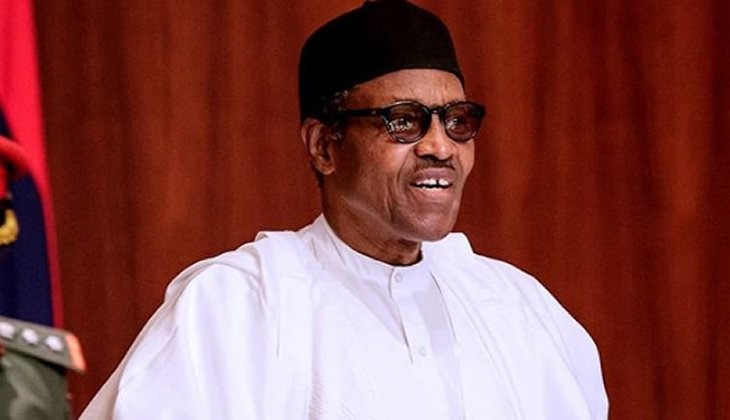
The inauguration of President Muhammadu Buhari for a second term today is the dawn of another day, but, what the day will bring is still misty. Twenty years after a relentless struggle by the progressives pushed the military off the dais; this is no time for revelry, but stock taking. At the inception of this democratic journey in 1999, it was expected that the vestiges of military rule would have been removed within the first term of the Obasanjo administration. It was not. The President, being a retired military officer and former military Head of State, was too soaked in the diktat that defines military rule to birth a full-blown democracy. What Nigeria gained was civilian rule. Besides, the constitution bequeathed the nation by the General Abdulsalami Abubakar administration offered some checks, and the legislature at the federal and state levels sought occasionally to assert their relevance.
Yet, 20 years after, only feeble steps towards democratic and physical development have been taken. Institutions remain very weak and have willingly surrendered their constitutional roles and powers to the impunity of one man – the Chief Executive, who has become rarefied like the British Monarch in the medieval period. The government has thus been far, very far from the people. Hardly does anyone remember between elections that power derives from the people. The rulers, even at elections, lord it over the people as they form conclaves that decide those to be fielded, in most cases limiting the choice available to the electorate. It is paradoxical that the liberal constitutional provisions to enable politicians register political parties have been exploited in a way that the more parties are established, the less the real choice. Internally, the parties have crowded out members, leaving choice to a few strong men. It is obvious that building a democracy founded on free choice starts in the political parties.
A challenge for the federal system practiced in the country today is the military-induced unitarism embedded in it. Powers are lopsided in a Federal Government that acts like a carpetbagger mopping up resources and responsibilities of the states that have been turned into beggars. Unlike the Republican Constitution of 1963, there are no residual powers bestowed on the states, while the few items on the concurrent list are within the jurisdiction of both the federal and state governments, and where there is a conflict between the two tiers, the federal prevails. Then, the pernicious exclusive legislative list containing 68 odd items on which only the Federal Government is permitted to legislate. Unfortunately, despite two expensive constitutional conferences, nothing has been done to review the antidemocratic, anti-development structure. From General Olusegun Obasanjo to General Buhari, nothing has been done to tweak the system with a view to accommodating and harnessing the social, cultural, economic and political diversity of the country. This remains a clog in the wheel of progress.
The economic architecture is designed to pauperise the majority. Both the political and economic elites have continued to conspire to corruptly convert state resources to private use. Although the Buhari administration has said much and raised awareness on this, drawing attention to the direct relationship between the opulence of the privileged few and abject poverty of the majority, a structure that could deliver transparency, accountability and efficient polity is not yet in place.
The 20th year mark is an appropriate point to reflect on the state of the nation – its democracy, governance structure and cost, institutions, leadership recruitment and the various sectors like education and health, power, etc. A thorough and sincere review of these would rekindle the citizens’ confidence in the state and its ability to provide for their socio-political needs.
Drafters of the constitution realise that governance is about a social contract between the leaders and the led. Thus, in section 14, they pointed out that the primary purpose of government is to provide for the security and welfare of the people. If there is one area in which governments since 1999 have failed, it is guaranteeing the security of lives and property. In the South South, it started as agitation for resource control. While fiscal federalism in various shapes is inseparable from the federal system of government, the agitation was regarded as treason by the overbearing Federal Government. The ensuing militancy resulted in undue loss of lives, public and private property as well as revenue. Then some youths from the South East sought to resuscitate the Biafran State. Again, the Nigerian state regarded the move as treason and sought to crush it. Crime has festered uncontrollably under the various administrations. When it’s not kidnapping in the Niger Delta and South East, it’s armed robbery in the South West, thousands of lives have been lost to the herdsmen attacks on farmers, their farms and villages in the North Central.
The Book Haram insurgency that started as a mere religious ideological movement in 2009 has assumed a new dimension, leading to the death of thousands and displacement of millions in the North East, cattle rustling and banditry in the North West and general insecurity of lives nationwide. The security forces have failed to contain the reign of terror.
As President Buhari today takes the oath of office to serve the Nigerian people and move the country to the “Next Level”, he should realise that history has reposed in him a great responsibility. We expect him to fulfil the promises he made during the electioneering campaign. As the newly appointed Central Bank governor, Godwin Emefiele, has pointed out, life is hard in Nigeria today as it usually is in a country that only recently exited recession. But what matters most are policies being designed to promote economic development and the implementation. In the administration’s first four years, the spat between the executive and legislative arms of government heated up the polity needlessly. We hope the President would have learnt how to ensure smooth relationship between him and leaders of the National Assembly. It is unfortunate that Nigerians bear the brunt. As Commander-in-Chief of the Armed Forces of the Federal Republic, Head of State and Chief Executive, the President is the father of the nation. He has a unique opportunity to redesign the nation. This is another turning point for Nigeria to regain its position as ‘giant of Africa’.