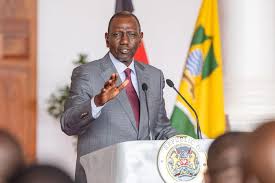
President William Ruto of Kenya, on Tuesday, moved to contain the fallout over his controversial remarks on Nigerians’ spoken English.
He told delegates at the Kenya Mining Investment Conference and Expo 2026 that his comments had been taken out of context.
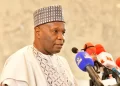
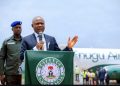
Speaking in the presence of Nigeria’s Minister of Solid Minerals Development, Dele Alake, Ruto sought to recast the remarks that had triggered outrage across social media and stirred criticism from Nigerians.
“Please convey my regards, Minister, to President Tinubu, my friend, and to the great people of Nigeria, who are my in-laws,” Ruto said.
Referring to the controversy, the Kenyan leader said he spoke during a private conversation with fellow citizens before the comments became public.
He said he was, however, misrepresented.
“What I was saying was simply that we in Africa speak very good English. In fact, in countries like Nigeria, if you do not speak excellent English, like the kind we speak in Kenya, you may need a translator to fully appreciate the exceptional English spoken by Nigerians,” he said.
Ruto added that the backlash had created an opportunity for broader conversation, while jokingly expressing hope there would be no “consequences” from his Nigerian “in-laws.”
Ruto’s daughter, June Ruto, is married to a Nigerian national, Alexander Ezenagu.
The remarks marked a shift from an earlier comment that had drawn widespread condemnation after Ruto was quoted telling Kenyans in Italy that Nigerians’ English was difficult to understand and that “you need a translator.”
The statement had provoked accusations of disrespect and sparked debate over linguistic identity, colonial legacies and relations between two of Africa’s largest English-speaking nations.
Responding at the mining summit, Alake, who was also with other Nigerian delegation, subtly pushed back on the issue.
In a brief but pointed remark that drew attention in the room, the Nigerian minister delivered a diplomatic but firm rejoinder.
“First of all, Your Excellency, Mr. President, I bring good tidings from the President and the people of the Federal Republic of Nigeria,” Alake said.
“The people of Nigeria have mandated me to inform you, and to assure you, that Nigerians speak very good English.”
The exchange followed days of backlash after Ruto told Kenyans in Italy that Nigerians’ English was difficult to understand.
The comment triggered criticism and accusations of disrespect.
However, the latest encounter suggested an attempt by both sides to turn a diplomatic friction into a moment of repair.
Social media sparring between Kenyans and Nigerians has become a recurring feature of online discourse, especially on platforms such as X.
Such exchanges often blend humour, rivalry and occasional sharp criticism.
These interactions frequently draw on comparisons between the two countries.
Issues ranged from economic performance and governance to entertainment, music, and sports.
At times, they escalate into heated debates, but they are also known for banter.
Recently, Nigerian President Bola Tinubu attracted attention online after comments suggesting Nigerians were “better off than those in Kenya and other African countries” despite domestic economic pressures.
The remark prompted a wave of reactions from Kenyans.