Nigeria, as has been the tradition, today marks her 54th independence anniversary in commemoration of the severance of the bonds of colonialism between her and Great Britain in 1960. Not even the institution by the civilian government of former President Olusegun Obasanjo of May 29 as National Democracy Day has diminished the memory of October 1 in the annals of Nigerian history. The joy was aptly captured by delegates to the recently concluded National Conference at the twilight of its deliberations, when they adopted the recommendation that the country should revert to the old National Anthem, which was in use between 1960 and 1978. The conference, according to reports, regarded the old anthem as a better symbol of unity, peace and prosperity. The lyrics were written by an expatriate, Lillian Jean Williams, and composed by Frances Berda, also a foreigner. The conference resolved that for Nigeria to achieve its dream of building a fully integrated nation, the country should, in the spirit of the old national anthem, live in unity and harmony as one indivisible entity under God.
The wording of the old anthem says: “Nigeria we hail thee, our own dear native land. Though tribe and tongue may differ, in brotherhood we stand, Nigerians all, and proud to serve our sovereign motherland. Our flag shall be a symbol that truth and justice reign, in peace or battle honour’d. And this we count as gain, to hand on to our children a banner without stain. O God of all creation, grant this our one request, help us to build a nation where no man is oppressed, and so with peace and plenty, Nigeria may be blessed”.
‘Arise, O Compatriots’, the indigenous national anthem that came into force in 1978 and is still being used, is no less noble, however. “Arise, O compatriots, Nigeria’s call obey. To serve our fatherland, with love and strength and faith. The labour of our heroes past shall never be in vain, to serve with heart and might one nation bound in freedom, peace and unity”, it says. Great messages both anthems convey, except that many do not still understand why the old one was changed, except the hypocrisy of not wanting an anthem fashioned by foreigners. But the preference of the National Conference for the old national anthem speaks volumes. It suggests, for instance, that Nigeria of old was a better motherland than what indigenous leaders, who have been managing her affairs since it attained independence in 1960, and a republic in 1963, have led her into. The leaders, who are largely local colonialists and crude rent seekers, scarcely value the inherent virtues invested in either the old or new national anthem.
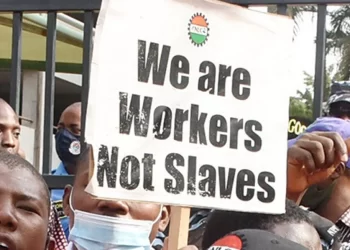
Today, as had been the case in the past, the Nigerian leadership, in their temporal and spiritual garbs, will flood the nation with messages of hope and peace. Yet the much the nation can thank God for is that Nigeria has continued to exist as one nation, not necessarily because her leaders have done much to improve her lot economically, socially or politically, particularly after the first military coup of January 15, 1966. Such politicians of old as the late Chief Obafemi Awolowo, Dr. Nnamdi Azikiwe, Sir Ahmadu Bello, etc.; were saints compared to most of the self-centred figures parading themselves today as national leaders. Because of decades of poor leadership, over half of the nation’s roughly 170 million people are stuck in grinding poverty and suffering. Joblessness is the in-thing.
The mood of the nation in 1960, when real hope existed in view of the bountiful human and natural resources the country is endowed with, has given way to despair. Not only have politicians failed to grow the economy and improve living conditions, they have turned apostles of ethnic and religious hatred. Part of the nemesis is the insurgency the country is currently battling with in the North East, and sundry crimes and restiveness in other parts of the country. There may be some landmark achievements alright, but those milestones are but like spittle, compared to what should have been the case had the nation’s leadership been devoted to the development and growth of the country, instead of serving self since the 1960s. Therefore, as the government rolls out its drums to celebrate today, the focus should be on self-introspection and sober reflection on the way forward for the country, not reveling. Of a truth, nothing on ground today truly justifies the bitter battles of Nigeria’s past heroes to secure the nation’s freedom from colonialism.