It is no secret that some states in the country have not been able to pay their workers’ salaries for periods ranging from one to six months, and even more in few instances. Some have also not been able to pay their pensioners as due. About 22 states out of 36 in the country are reported to owe their workers and pensioners arrears of salaries and pensions. Some of the affected states are Osun, Benue, Edo, Plateau, Oyo, Rivers, Imo, Ekiti and Bauchi. Osun was reported to owe its workers about six months salary arrears, Benue, over five months; Edo, five months; Plateau, five months; Oyo, three months and Rivers, two months. Imo, Ekiti and Bauchi are indebted to their workers for one month only. In Kogi State, the government was reported to have effected a 40 percent cut in workers’ salaries.
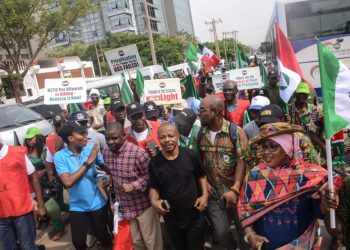
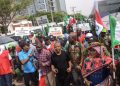
Workers in many states used the occasion of this year’s May Day to publicly protest their governments’ failure to pay their salaries. They called on the affected governments to pay their salary arrears forthwith.
Signs that some state governments would not be able to fulfill their financial obligations to their workers emerged early last year following the drastic fall in the prices of crude oil in the international market, which led to a shortfall in national revenue. The slump in oil prices hit Nigeria more because of her over-dependence on oil as the major source of revenue, and the fact that there are no adequate safety valves for the rainy day. The plan by the federal government, sometime ago, to save some of the money in the Excess Crude Account (ECA) and run a Sovereign Wealth Fund (SWF) for the rainy day, was thwarted by state governors who insisted that such funds must be paid into the Federation Account and shared to all tiers of government as stipulated in Section 162 of the 1999 Constitution (as amended).
The governors apparently did not trust the federal government’s ability to restrain itself from tampering with the funds. In opposing the operation of SWF, the state chief executives had argued that the rainy days were already here and there was, therefore, no need to save the money. They heavily relied on Section 162 (1) of the Constitution, which states that “The Federation shall maintain a special account to be called “the Federation Account” into which shall be paid all revenues collected by the Government of the Federation, except the proceeds from the personal income tax of the personnel of the Armed Forces of the Federation, the Nigeria Police Force, the ministry or department of government charged with responsibility for Foreign Affairs and the residents of the Federal Capital Territory, Abuja.”
All monies paid into the Federation Account are, therefore, distributed to all tiers of government in the country every month, and largely spent, leaving nothing to meet exigencies such as has arisen following the shortfall in oil revenue on account of the crash in the price of the product.
Now that the actual rainy day is here due to the shortfall in national revenue, some state governors that rely heavily on monthly handouts from Abuja can no longer pay their workers’ salaries. Some are even calling for a bailout for the states that could not meet their statutory monetary obligations.
Although the sharp fall in crude oil prices may have contributed to the inability of some states to pay their workers’ salaries, an objective assessment of the situation will likely reveal that other factors played a role. It appears that some of the governors have not been prudent enough with the management of state funds. The payment of workers’ salaries and pensions was clearly not prioritized in some of the states. Meanwhile, the governors are almost certain to have been collecting their security votes, and they all committed funds to the recent elections. These are drain pipes that likely made it impossible for them to meet their financial obligations to their workers.
We deplore the attitude of some state governors towards workers’ welfare and urge them to retrace their steps. They should clear all arrears of salaries owed their workers. Let the concerned governors realise that the growing fad of unpaid salaries is capable of instigating civil disobedience and unrest in the country. They should handle their states’ finances better.
The governors should be bold enough to accept blame for this situation. Let all states find other avenues to generate revenue and stop depending solely on monthly handouts from Abuja. Let them cut all avenues of wastages including security votes, election-related spending, unnecessary political appointments and humongous perks of office, to free funds for workers’ salaries and infrastructural development