Today, May 27, Nigerian children will join their peers in countries across the globe to celebrate Children’s Day. Globally recognised as a day to honour children, different days are set aside as Children’s Day. First proclaimed by the World Conference for the Well-being of Children in 1925, it was universally established in 1954 and proclaimed by the United Nations General Assembly to encourage all countries to institute a day, first to promote mutual exchange and understanding among children, and second, to initiate action to benefit and promote the welfare of children. The United Nations, on November 20, 1958, adopted the Declaration of the Rights of the Child, which relates to a series of children’s rights proclamations drafted by the founder of Save the Children Fund, Eglantyne Jebb, a British, female reformer (1876 – 1928) in 1923.
Jebb’s initial 1923 document, according to reports, says: “The child must be given the means requisite for its normal development, both materially and spiritually – the child that is hungry must be fed, the child that is sick must be nursed, the child that is backward must be helped, the delinquent child must be reclaimed and the orphan and the waif must be sheltered and succoured”. It argues that the child must be the first to receive relief in times of distress; must be put in a position to earn a livelihood and protected against every form of exploitation and in the consciousness that its talents must be devoted to the service of its fellow men. The United Nations adopted the Convention on the Rights of the Child on November 20, 1989, which deals with the specific needs and rights of the child and requires that states act in the best interests of the child as against the common law approach that treated children as mere possessions.
The Convention requires an overhaul of child custody and guardianship laws or a creative approach to same within existing laws; acknowledges every child’s basic rights to life, name and identity, to be raised by parents under a family or cultural setting and to have a relationship with both parents, even if they are separated. The Convention also acknowledges that children have the right to express their opinions and to have those opinions heard and acted upon when appropriate; to be protected from abuse or exploitation; to have their privacy protected and not be subject to excessive interference. It also obliges signatory states to provide separate legal representation for children in any judicial dispute concerning their care. Rights to be protected from hazardous, harmful work and economic exploitation, and not to be subjected to torture or other degrading treatment or punishment, are also there.
But as Nigeria’s public and private schools, as well as religious bodies parade gaily-dressed Nigerian kids to mark Children’s Day 2015, the nation should soberly reflect against the facts, first and foremost that the day is recognized around the world strictly for the purpose of honouring children, and that Nigerian children have not gained much from the import of Children’s Day as yet. The employment of child-househelps and domestic workers below the age of 12 years is still rampant, though declared unlawful lately by the Federal Government, the United Nations Educational, Scientific and Cultural Organisation (UNESCO) has ranked Nigeria high among countries with a very large number of outof- school children, approximately 10.5 million, out of a total population estimate of 170 million; and about 17,000 children under the age of five died from preventable ailments every day in 2013 , according to UNICEF records.
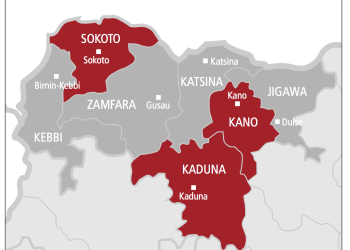
Indeed, child abuse – maltreatment of children, sexual harassment, denial of education, child labour, intimidation and molestation, physical assault, neglect, and even child trafficking, etc – are still rampant in Nigeria. Following the United Nations’ General Assembly adoption in 1989 of the Convention on the Rights of the Child, over 178 countries, including Nigeria, ratified same. Nigeria’s National Assembly passed the Child’s Rights Law in 2003, but only 16 out of the nation’s 36 states have domesticated the law so far. The said law prescribes a five-year jail term and heavy fines for perpetrators of child labour, for example. Most of the culprit states are in the northern part of the country; and their reasons are hinged on religious and cultural reservations. This should be a ‘food for thought’ for Nigerian authorities as they laugh off today’s Children’s Day.