The lingering political crisis in Adamawa State reached a climax last Tuesday as the state governor, Murtala Nyako, was impeached by the State House of Assembly over allegations of gross misconduct.
His sack, which came a day after the Deputy Governor, Bala Ngilari, handed over his own resignation letter to the House of Assembly, had been long-heralded. It followed his indictment by the 7-man panel set up by the immediate past Chief Judge of the state, Justice Ambrose Mammadi, to investigate 20 allegations of wrongdoing against him.
The panel had found him guilty of 16 of the allegations, and 17 of the state’s 25 legislators, during plenary on July 15, voted for his impeachment, meeting the two-thirds majority required by the Nigerian Constitution to remove him from office.
Nyako’s sack has, however, been generating ripples across the country. While a number of stakeholders have hailed the sack of the governor and described it as a sign that democracy is taking root in the country, controversies have been swirling over the adherence, or lack of it, to due process in the procedure that led to his removal from office. The failure of the investigative panel to serve a notice of impeachment on the governor, as required by the Constitution, has been identified by some eminent legal practitioners as sufficient grounds for the courts to overturn the impeachment. Their submission is that it did not comply with the law.
Some other legal practitioners have also decried the reported militarization of the process, with soldiers taking over the vicinity of the Government House and the panel sittings. The resignation of the state’s deputy governor, a day before the governor’s impeachment, was also said to be legally a nullity, because it did not comply with the stipulation of the Nigerian Constitution that the resignation letter of the Deputy Governor should be handed over to the State Governor. Nyako was still the sitting governor in the state at the time that the deputy governor submitted his resignation letter to the State House of Assembly. The swearing in of the Speaker, Alhaji Umaru Ahmed Fintiri, who presided over the impeachment proceedings, as acting governor, making him a direct beneficiary of the impeachment, also appears untidy
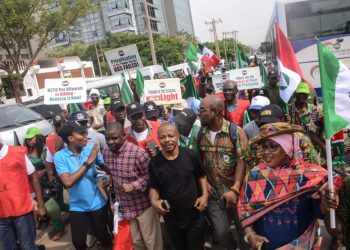
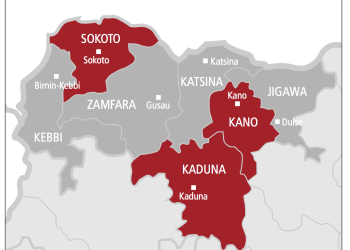
The sack of the governor over impeachable offences, some of which were reportedly committed as far back as five years ago, just months after he abandoned the Peoples Democratic Party (PDP) and moved to the opposition All Progressives Congress (APC) has been described as a ploy to decimate the opposition and either punish, or whip state governors who left the PDP for APC back into line. Already, it is being alleged that the PDP impeachment train, which is already on course in Nasarawa State to oust another APC governor, Tanko Al Makura, will subsequently berth at Edo and Rivers, which are non-PDP states. Already, there are public protests in Nasarawa against the plan to impeach the governor.
For us, the controversy surrounding the sack of Nyako is unfortunate. Our view is that utmost due process ought to be strictly followed in the handling of sensitive processes such as impeachment, so as not to leave room for the kind of controversies that this development is generating.
It is very good that the Nigerian Constitution has made a provision for the impeachment of governors that are found guilty of gross misconduct. But, we must be careful to use it solely for dealing with errant political office holders. We must never allow the impression to be created that it is a whip that should be used to lash governors.
Although Nyako appears to have done a lot to contribute to his own ouster with his open antagonism of President Goodluck Jonathan with his claim, in an odious letter, that the president was perpetrating genocide against the North; his defection to the APC at a time the state House of Assembly was dominated by the PDP; the plethora of allegations of financial misconduct and nepotism against him; and his seeming alienation from his people, his impeachment must still follow the rule of law. He also did not help his case by failing to appear before the panel set up to investigate him.
Although we are not against impeachment of governors who are found to have compromised their offices, we insist on due process in the application of the procedure. It is also important to note that the rumoured coming gale of impeachments can only have ominous implications for the stability of our democracy and the future of the country, especially if due process is not strictly` adhered to. The failure to adhere to constitutional requirements for the process could torpedo our democracy. We must never use impeachments as a tool of harassment of opposition politicians, or to win states, without elections. We must never also leave room for the impression that such impeachments are sponsored from outside the states, or are influenced more by political considerations and machinations other than the allegations of wrongdoing against political office holders. The positive impact of this impeachment, however, is that it has affirmed the power of the State Houses of Assembly to keep governors in check. This is something Nigeria seriously needs to rein in some state governors.
Nyako, who is the sixth state governor to be impeached in the country since the restoration of democracy, after Diepreye Alamieyeseigha of Bayelsa State, Rasheed Ladoja of Oyo, Ayo Fayose of Ekiti, Joshua Dariye of Plateau and Peter Obi of Anambra, has vowed to go to court to challenge his removal. That is a good development. The pronouncement of the courts should lay to rest the controversy surrounding this impeachment.