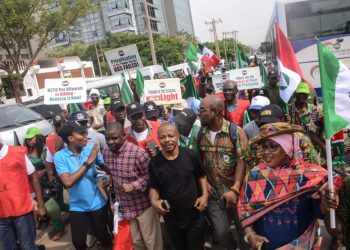
Primary school teachers in Benue State are expected to return to class on July 7, after ending their nine-month-old strike over the non-payment of the N18,000 minimum wage by the state government. Pupils have wasted one academic year at home, just like polytechnic students across the country. A reversal of this debilitating order is, therefore, cheery news, just as we sympathise with the teachers and the pupils.
A deal that the teachers struck with the state government indicates they will sacrifice their minimum wage arrears between 2011 and 2013, while implementation of the new salary structure takes effect from January 2014. For Governor Gabriel Suswam, it is a big relief as he had planned to reduce the state’s workforce by 40 per cent in order to meet the teachers’ demand, following the indifference of workers to a salary cut proposal.
The teachers had objected to a slash of N6,000 from the N18,000 minimum wage, just as the permanent secretaries were adamant on not sacrificing N25,000 from their monthly salary. The governor had reviewed the latter’s pay from N73,000 to N400,000 when he assumed office seven years ago.
While the tug of war lasted, Suswam had argued that paying teachers the N18,000 minimum wage would catapult the state’s total monthly wage bill to N4 billion, stressing that it outweighed its income. “There is no way, even if the teachers are on strike for 20 years, I can raise N4 billion to pay all these salaries; that is practically out of place,” Suswam had earlier vowed.
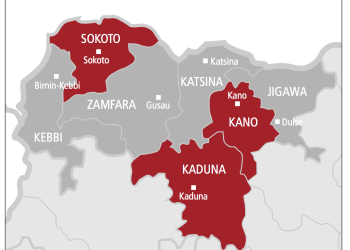
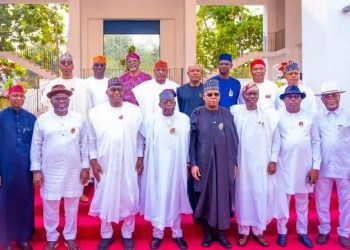
Many states bear the same cross and this could be gleaned from the Northern Governors’ Forum’s position three months after the new wage law came into force in 2011. It had argued that only a review of the revenue allocation formula in favour of the states would guarantee the discharge of the wage burden. The current sharing formula gives 52 per cent to federal, 36 per cent to states and 26.7 per cent to local governments.
However, in Benue, what is very critical now is the immediate payment of the nine months’ salary arrears of the famished teachers. Besides, the government has to show good faith in also paying the minimum wage arrears. By forgoing the two years’ arrears, the teachers have sacrificed enough, and should not be stretched further.
The governor should take this challenge seriously, as anything to the contrary will irredeemably jeopardise the future of the pupils. But our concern is his sincerity, given his earlier tough talk on incapacity. So, from where did he source the funds now? Again, his government had before now honoured, in the breach, an agreement it signed on August 1, 2013 with the teachers, which made the teachers to down tools. Now that a new pact with the teachers has helped to restore normalcy, he must keep the faith.
Primary school education is not just the foundation of education, but also that of a meaningful life to every human being. But it is sad that this categorical imperative is not being appreciated in the country generally. Benue is not alone in this quagmire. Media reports last year indicated that not less than 20 states had yet to implement the minimum wage due to their paltry revenue base.
This situation calls for immediate action in the form of a general reduction in the cost of governance. Just like the Federal Government, many states have bloated bureaucracy, made worse by a large army of political appointees. “Ghost” workers and lack of transparency and accountability have rendered states prostrate and incapable of rendering basic services to the people. But they can free themselves from perennial cash squeeze by optimising their economic potential.
Benue is well-endowed in agriculture, which, if fully exploited, can make it the envy of other states. That it has not done so as yet is evident in its internally generated revenue, which is still very low: N6.8 billion in 2010; N11.1 billion in 2011; and a drop to N8.4 billion in 2012. For the post-strike normalcy to be maintained, the state government should begin to think out of the box by initiating development strategies that will change its parlous revenue profile.
Dwindling revenue from oil, with $12 billion lost to oil theft in 2013, a drastic reduction of crude export to the United States and China, and the emergence of other oil markets in Africa and elsewhere, should animate new thinking and soul-searching, not just for Benue, but others.
Therefore, Suswam should distance himself from the retrogressive idea that the only way to make the states financially buoyant is by altering the revenue formula in their favour. This is a rent-seeking mentality that has made the states indolent, always waiting for the month to end to rush to Abuja to collect their allocations. This lazy approach to governance must cease.
Nigeria is a federation, with the states as its units. There is hardly any state that does not have its fair share of the country’s abundant mineral wealth, and official geological surveys have identified 34 types ready for exploitation. In a federal arrangement, states control their resources and pay royalties to the centre. Despite the odds against enthroning this economic paradigm since the collapse of the First Republic in 1966, the governors now have the opportunity to seize the momentum provided by the National Conference.
As part of its recommendations, the conference resolved that states can now obtain licences to mine any solid mineral deposit in their territories. By so doing, the investment space will be enlarged, more jobs created, and more taxpayers brought into the tax net, which invariably would increase their revenue base.
The Benue teachers strike should serve as a lesson to other states. Any state that cannot afford to pay its teachers or give basic primary education to its pupils is not fit to exist.