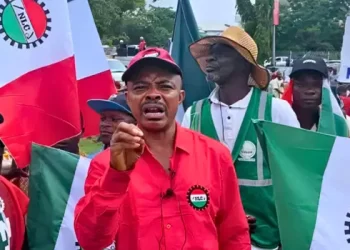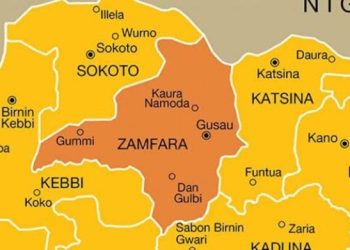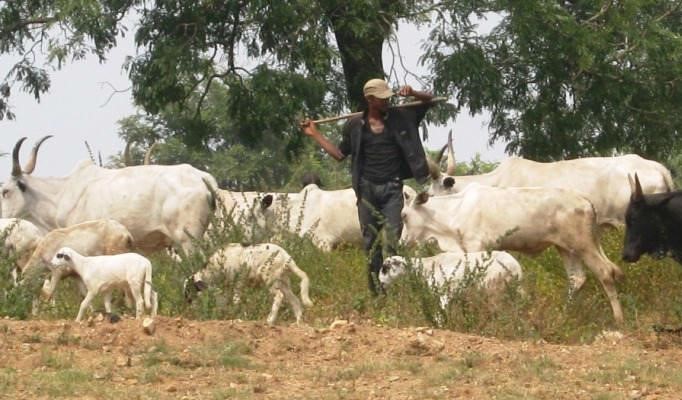
The Maiyetti Allah Cattle Breeders Association has protested against a proposed bill to prohibit open grazing in Taraba state demanding the stoppage of action on the bill.
Governor Darius Ishaku had proposed the executive bill to Taraba State House of Assembly on May 7.
The bill became necessary following a call by the House, urging the executive arm to take measures to bring lasting solution to the killings and destruction of property in the state as a result of herdsmen and farmers’ clashes.
The bill is entitled, ‘A bill for a law to prohibit open rearing and grazing of livestock and provide for the establishment of ranches and the Taraba State livestock and ranches administration and control committee and for others connected thereto 2017’.
The House had good reason to call for the bill in the face of herdsmen and farmers’ clashes in Taraba which had claimed no fewer than 2,000 lives and destroyed property worth billions of Naira.
After the anti-open grazing bill passed the second reading, the Speaker of the House, Hon. Peter Abel Diah, announced that the committee processing the bill was going to organize three weeks public hearing.
He said the public hearing would engage stakeholders in the state who were into farming, grazing and cattle rearing to ensure comprehensive deliberations before the passage of the bill into law.
Diah explained that areas where the executive arm failed to capture in the bill would be addressed in the course of the deliberations.
Reading the protest speech as the hersdmen stormed the state House of Assembly, the Chairman, Maiyetti Allah, Taraba State Chapter, Alhaji Sahabi Mahmud Tukur, said the bill was inimical, ill- intended, discriminatory and a misplaced priority, adding that the association rejected the bill in its entirety.
“Grazing, like any other occupation, is cultural which, in the case of Nigeria and Taraba State in particular, is practised substantially by the Fulani people. One may be very right to state that 90 per cent of the grazers belong to the group, However, the bill expected to provide this occupation has no provision whatsoever for the members. For instance, those who drafted it did not find it expedient to get our inputs, neither did they consider to establish ranches for us to permanently settle for proper grazing”, Tukur said.
“We call on members of the state House of Assembly who are representatives of the people to stop this bill in the collective interest of those they represent”.
The Chairman threatened that there would be breakdown of law and order in Taraba should the House insist on passing the bill into law. He also said the association and its allies would proceed on a one-week strike to press their demand.
“There will be no red meat, no cow in the market and all butchers will boycott market activities for seven days should the House fail to listen to our demand”.
Responding immediately after the protest, Speaker Diah condemned the Maiyetti Allah statement that Taraba would witness a breakdown of law and order should the House pass the bill into law.
Diah said the association was protesting in ignorance since all of the issues raised in the protest were accommodated in the proposed bill and there was room to listen to the concerned persons during the planned public hearing.
He said the committee set up by the House to process the bill had set aside three weeks within which to conduct the public hearing on the bill before its passage.
According to him, all issues not stated clearly or seem confused to the public would be addressed during the public hearing. The Speaker said the House of Assembly had earmarked Wukari as a center for the public hearing for the people of the southern zone; Bali for the people of the central zone; and Jalingo, the state capital, for the people of the northern zone.
He called on Maiyetti Allah to list the areas they were not comfortable with in a memorandum for the public hearing. He further stressed that the House had given room for groups and individuals to attend the public hearing with their lawyers.
Diah described the protest as a deliberate move by the Maiyetti Allah to cause public disorder in the state capital. Diah said the group did not follow due process in carrying out their protest which was the reason security men could not allow them access into the Assembly complex.
“How can you mobilize for protest and allow your members to carry arms? The state House of Assembly is an organized place and security agencies will not allow mayhem. I think that was why they were not allowed to gain entrance into the complex, but as a leader elected by the people, I on attending to attend to them even as they carried their weapons”, the Speaker said.
The following day (Tuesday), all the abattoirs in Jalingo and other major towns in Taraba were closed by the Maiyetti Allah in an apparent move to implement their demand.
One of the biggest livestocks market in the North-East located in Iwari, Taraba State was shut down. Buyers, who had travelled from the South-East to attend the market, went back disappointed. The state capital experienced the strike for two days.
Governor Ishaku condemned the protest by the Maiyetti Allah and the attendant strike.
Ishaku, who spoke through his Senior Special Adviser on Media and Publicity, Mr. Sylvanus Giwa, said the Maiyetti Allah action was condemnable and uncalled for.
“The Jalingo abattoir is a state government facility and we want to warn that nobody has the right to close it without the permission of government. We are hereby calling on the Maiyetti Allah to stay away from the facility and allow people to go about their normal businesses”, the governor said.