The Federal Government has again restated that the rice distributed to states was certified fit for human consumption.
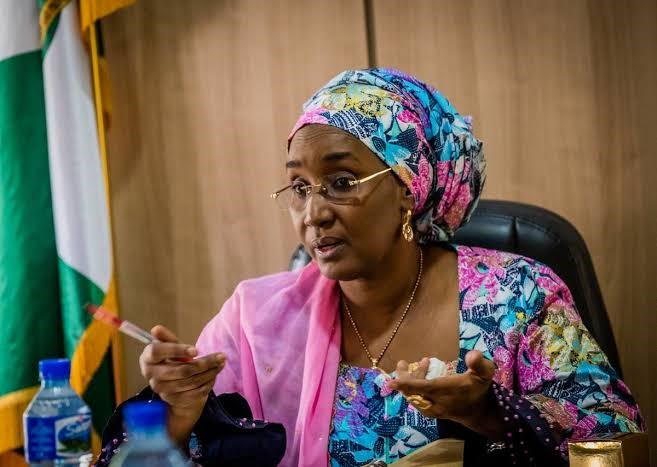
Minister of Humanitarian Affairs, Social Development and Disaster Management, Hajiya Sadiya Farouq, who gave the assurance, said the rice was accessed by the National Agency for Food Drug Administration and Control (NAFDAC) before delivering them to the states.
Farouq was reacting to accusations by Governor Seyi Makinde of Oyo State that the rice was contaminated.
Farouq said the rice was distributed to the states as handed over to the ministry by the Nigerian Customs Service, adding that NAFDAC also assessed the edibility of the rice.
She refuted claims that the rice given to the Oyo State government from the Federal Government as palliative had expired, adding that such claims were baseless.
She said, “We all know, if we keep rice or grain, it is bound to change colour but that does not mean it is unfit for human consumption.”
On the distribution of palliatives, the minister said there were laid-down structures that the ministry was following in the distribution, adding that the ministry was working with state governments in distributing palliatives.
Farouq added that the ministry was working with non-governmental organisations (NGOs), the Red Cross and civil society organisations in the monitoring and evaluation of COVID-19.
She said the Federal Government intervention was targeted at the poor and vulnerable in every state of the federation.
In his remarks, Dr. Sani Aliyu, PTF national coordinator, said COVID-19 testing was not a competition among the states, pointing out that, rather, they needed to be transparent in testing for the virus.
“So I’m appealing to state governments to, please, continue to support the state emergency operating centres, the state ministry of health and make sure that everybody who needs to be tested for COVID-19 in any state in the country has that opportunity of having the test done.
“In addition to this, I will like to remind state governments that there are a number of states that continue to have inadequate capacity for isolation. Now is the time to correct this before the numbers start going up. I’m appealing to state chief executives to, please, make sure where you do not have adequate isolation facilities to do so. The PTF has already put 300 as per state minimum number of isolation beds that should be available in every state.”