Shell Petroleum Development Company, SPDC, has disclosed that electricity companies in the country owe it up to $248 million, about N49.6 billion, as at the end of 2015.
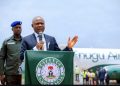
In his presentation at a conference in Abuja, General Manager, Gas, SPDC, Mr Philip Mshelbila, said the power firms’ debt is one of the numerous challenges confronting gas supply in the country.
Other challenges, he lamented, is the persistent threat to the security of lives and property in the Niger Delta and the ineffective and inefficient regulations as viewed by some operators.
He maintained that clearing the backlog of debts in addition to the resolution of the Joint Venture funding challenges would help bring about an increase in gas production, and also increase supply to the power firms, thereby bringing about a significant improvement in power supply.
He also called for an adequate multi-year funding for gas development projects as well as regular payment for gas and power.
Mshelbila further called for the immediate resolution of the power transmission constraints, especially as this would guarantee reliable operations and help minimise grid instability, and advocated guaranteed revenue flow across the electricity value chain, in the area of cost-reflective power tariff and Discos collection and remittance.
He further advised that the necessary infrastructure be put in place to guarantee adequate gas supply, such as production and processing facilities and pipelines, as well as power generation, transmission and distribution facilities. He also advocated a proper commercial framework that would ensure an economic and market driven gas process and revenue securitisation across the value chain.
Also speaking, Mrs. Donna Obaseki-Ogunnaike, Partner, Adepetun, Caxton-Martins, Agbor&Segun (ACAS-Law), an energy and project finance group, identified the challenges confronting the gas sector to include the absence of clear regulatory framework for gas development and investment, and insufficient incentives for investors intending to engage in gas development.
Other challenges, she added, is the fact that gas extraction/exploration is tied to crude oil, as the current regime only permits the extraction/exploration of gas under oil prospecting licences or oil mining leases.
To solve the challenges, Obaseki-Ogunnaike said: “Harmonise laws, regulations and policies on gas into a single piece of legislation in order to achieve clarity in the legal/regulatory regime for gas in Nigeria. Encourage the increase of Nigeria’s gas reserves and extraction of available reserves through the grant of licences/permits for gas exploration and extraction, distinct from the approvals for crude oil.
“Grant of tax holidays for investors engaging in gas activities as gas projects. The current list of pioneer industries, published in May 2015, only recognises manufacture of gas and gas distribution as pioneer industries. This should be expanded to include activities for gas exploration, extraction and processing.”
She further lamented that eight years after, the PIB is yet to be enacted into law, adding that this has created regulatory uncertainty in the industry and reduced the inflow of the much needed investment into the industry.
Consequently, she noted that Nigeria has been placed in an unfavourable position in its competition for investment against other oil producing countries in Africa. Vanguard