Plans by the 58-member Senate Committee for the Review of the 2014 National Conference in the bid to ascertain the wishes of the people and give effect to them is welcome. It lays to rest the agitation by a section of the society that President Muhammadu Buhari has foreclosed examining all suggestions made at the confab, thus suggesting that nothing serious and far-reaching should be expected from the committee headed by Deputy President of the Senate, Ovie Omo-Agege.
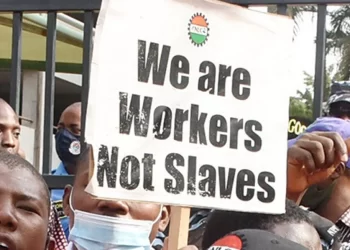
Nigeria is at such a critical juncture in its evolution that indicates it cannot go far working on the existing structure. The presidential system as being practiced from 1999 has been too expensive for the fragile economy. Operators of the system have indicated that they are unwilling to tamper with the existing structure that imposed a huge cost of governance and tends to suggest that Nigeria has as much money as the United States of America to carry the same burden. Recent events in the country that culminated in the #EndSARs protest indicate that not only are the people no longer willing to be led by the nose, they are ready to take on the officials in government. It is an indication that the existing governance template is unacceptable and could lead to combustion anytime soon.
It is thus in the enlightened self and collective or class interest of the elite to make critical concessions that would accommodate fundamental changes to the existing system that would bring in the youth and women who have been handed the short end of the stick for too long. Besides, the poor are at the end of their tether; they could spill to the streets anytime soon, in realisation that they only exist to fuel the economy for the wealthy and powerful. This must have informed the decision to change gear and look at the 2014 confab report earlier rejected by President Buhari.
The 10,335-page report made far-reaching suggestions in 600 resolutions. Produced by 492 delegates drawn from all parts of the country, and representing various interests, it is unwise to throw such a report out of the window. The question could be asked why the Goodluck Jonathan administration that set it up failed to consider and give it effect; but that would not be enough to discard it, realising that seven billion Naira was budgeted for it.
We do not suggest that the report be accepted by the Senate Committee and its House of Representatives counterparts wholesale, but, it is in the interest of the nation to pore over it and use the report to gauge the mood of the people. We note that there are many resolutions in the document that are as controversial today as they were in 2014, which should therefore be thoroughly examined in the best interest of the majority. Such resolutions include the scrapping of the 774 local government areas, leaving the creation to the various states, creation of 18 additional states even as the existing ones are groaning under the weight of the burden they bear, the suggestion that the presidential system should be modified to accommodate some features of the parliamentary system of government such as the appointment of the Vice President from the National Assembly, and rotation of the presidency between the North and the South. These are issues for which critical stakeholders from the academia, the youth, retired bureaucrats, the labour movement and women should be invited to a public hearing.
The public hearing this time should not be a sheer talk shop. This is another opportunity to redeem the 1999 Constitution that has been shown to be at best a military decree. A review by the National Assembly may not necessarily be adequate to fully cure the document of its anti-federalism and anti-democratic intent and content, but, not yet finding the will to convoke a constituent assembly whose resolutions would be subject only to a referendum, the Ninth National Assembly should do the best possible, not pretending that the interest of the political class could be equated to the interests of the whole people. There are irreducible minimums that the enlightened Nigerians have demanded: reduce the over-bearing power of the centre, especially with regards to national resources, establish police at the sub national level, substantial devolution of power and a thorough debate of what should constitute the federating units.
We expect that this would not be turned into another jamboree that would take the lawmakers all over the world or that would take forever to conclude. Realising that the Jonathan confab could not be considered by that government because politicking caught up with it, we expect that the National Assembly would expeditiously turn in its report for presidential assent before mid-2021.