To the credit of President Goodluck Jonathan administration, even in its twilight, the Federal Government, according to reports last week, has declared as illegal and a criminal offence in the country the employment of house-helps and domestic workers that are below the age of 12. Director-General of the National Agency for the Prohibition of Trafficking in Persons (NAPTIP), Mrs. Beatrice Jedy-Agba, who dropped the hint in Abuja, said the development followed the signing into law of the Trafficking in Persons’ Enforcement and Administration Act by President Jonathan on March 26, 2015. Jedy-Agba said parts of the Act not only prohibit the employment of children below the age of 12 as domestic help, but also outlaw the exploitation of a child under the age of 18 years employed as a domestic help.
For a country whose Senate only two years ago primitively proposed that Nigerian girls can be married at an indeterminate age, meaning that a girl-child is deemed mature even if she is given out in marriage at the age of 10 years, possibly less, the nation cannot thank President Jonathan enough for sparing a thought on the plight of the Nigerian child. Many believed then that the Senate decided to rubbish itself because one of its own, a very prominent senator and ex-governor, drew public wrath for allegedly marrying an under-aged girl. But as was widely canvassed at the time, Nigerian laws recognise 18 years as the age of adulthood. On the attainment of the age of 18, one can vote or be voted for; and the right of litigation, etc, can also be enjoyed or enforced.
Indeed, the growing incidence of child abuse in Nigeria is frightening, with scant attention paid to the welfare of children often flaunted as leaders of tomorrow. The United Nations proclaimed 1979 as the International Year of the Child and went ahead to develop a long list of children’s rights. But very little has been done by many countries (Nigeria inclusive), by way of strictly observing those rights. They include the right to love and understanding, adequate food and health, free education, play, identity and special attention to handicapped kids, regardless of colour, sex, religion, national or social origin.
On the contrary, child abuse – maltreatment of children, sexual harassment, denial of education, child labour, intimidation and molestation, physical assault, neglect, and child trafficking, among others – thrive generously. Not too long ago, the United Nations Educational, Scientific and Cultural Organisation (UNESCO) ranked Nigeria among countries with the largest out-of-school children. The report indicated that one out of every five Nigerian children is out-of-school. With approximately 10.5 million children roaming the streets, Nigeria topped the table of 12 other countries, which UNESCO said accounted for 47 per cent of the global out-of-school population. The General Assembly of the United Nations in 1989, adopted the Convention on the Rights of the Child (CRC); and over 178 countries, including Nigeria, ratified it. The 54 articles of the CRC take care of virtually all the inhuman acts being perpetrated against children, from rights’ abuses to sexual and economic exploitation.
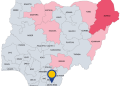
The National Assembly passed the Child’s Rights law in 2003, as a way of tackling the menace; following which the Lagos State government, for example, on May 28, 2007, signed the Child Rights Bill into law, in consonance with Chapter IV, Section 34 (1&2) of the 1999 Nigerian Constitution (as altered), which guarantees the fundamental human rights of the citizenry and the right to human dignity. Sadly, however, only 16 out of the nation’s 36 states have so far domesticated the Child’s Rights law. The law, which provides for a five-year jail term and heavy fines for perpetrators of child labour, is yet to be endorsed by many states, especially in the northern part of the country, because it purportedly affronts religious and cultural considerations.
Of no less importance is the fact that the growing incidence of child abuse has a lot to do with poverty and destitution. A country like Nigeria, which is blessed with huge human and natural resources, has no business whatsoever with the outrageous level of poverty and child abuse afflicting it. Governments at all levels should establish social welfare nets for families, especially those within the low income bracket, as such handouts will enable them meet their basic daily needs and allow their children to be in school.