Nigerians and the world have, somewhat justifiably, been effusive in praise of the successful conduct of the 2015 elections. The collective sigh of relief reflects the widespread fear that the tensions built up in the run-up to the polls could trigger an implosion that would destabilise west and central Africa and topple the century-old artificial state. While we also applaud Nigerians and the electoral umpire, we suggest that much more needs to be done to ensure flawless, credible elections and strengthen our democracy.
Representative democracy is headlined by credible elections, described by a Yale University research in 1963, as the “formal decision-making process” by which a population chooses its leaders. A so-called democracy without credible elections is a sham and this is what Nigeria had been having since the return to civil rule in 1999. This explains why the Independent National Electoral Commission has received praise since it has done better than it did in 2011 and, more importantly, by breaking with the shambolic outing of 2007.
But we have not arrived at the promised land of credible elections. A coalition of civil society groups that monitored the polls dismissed the elections in Rivers, Akwa Ibom and Abia states as a sham. The leader of the African Centre for Leadership Strategies and Development, Humphrey Bekaren, speaking on behalf of international election observers on the Rivers elections, declared, “What we saw did not meet the international standard of electioneering, not even the ones set by INEC.”
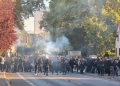
We must begin today to meet global standards. We should not, as observed by a re-elected senator, Sola Adeyeye, be comfortable with the whole world watching us with bated breath like unruly children anytime we hold elections. Ballot box snatching, murder, arson, deliberate disenfranchisement, poor logistics, vote-rigging and vote-buying should be eradicated from our electoral experience.
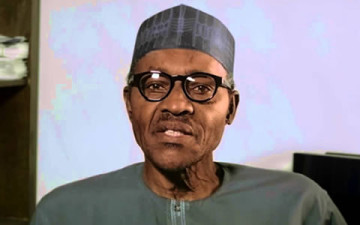
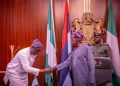
The reign of impunity by politicians, thugs, corrupt electoral officers and security personnel, ever willing to pervert the process for a fee, should end with the incoming administration of President-elect, Muhammadu Buhari, whose major electoral asset is his known hatred for corruption.
The major perpetrators of electoral chicanery are dangerous politicians who have refused to change their selfish and desperate ways, including the willingness to use any means, fair or foul, to reach and maintain public office. Along with their collaborators – corrupt INEC officials, security personnel and thugs – they never pay the price for their heinous crimes, but always go free with their electoral loot only to resurface for more dirty work at the next election. Some state governors, senior police and other security officers are alleged to commit electoral crimes but none is known to have been brought to book.
Buhari should consolidate on the progress made so far by INEC chairman, Attahiru Jega, by fulfilling his pledge to ensure that all those who commit electoral crimes are swiftly brought to justice. As long as electoral criminals go unpunished, they will continue to ride roughshod over the electorate with impunity. This should include investigating and filing murder charges against those responsible for the reported deaths of 25 persons and 66 other violent incidents during the governorship and states legislature polls. Similarly, those who steal votes should never again be allowed to enjoy public office.
Buhari and the National Assembly, where his party will have a majority when it reconvenes in June, should demonstrate that its election slogan of “change” is not deceitful by initiating amendments to the Electoral Act 2010 to provide for the conclusion of all election-related litigation before any victor takes public office. Our untidy arrangements have allowed some to enjoy stolen mandates as governors and legislators for as long as three years before the rightful winners are recognised by the courts, while some enjoy the full four-year term.
INEC should also look inwards and be more critical in responding to credible accusations against its officials. While, for instance, INEC went ahead to back its Resident Electoral Commissioners in Rivers and Akwa Ibom states, election observers returned damning reports on the polling in the two states and questioned the impartiality of the RECs. There should be a better protocol to address the concerns of voters and observers to persuade all stakeholders of fairness. It is damaging to the electoral process for INEC to go ahead and announce results where blatant rigging is widely reported. Going forward, INEC should consider further improvements in the technology deployed. Jega has done very well by introducing and insisting on the Permanent Voter Card and the card reader despite vehement opposition and blackmail from the government and the current ruling party.
An increasing number of countries around the world are adopting voting technologies, especially the Direct Recording Electronic, System Electronic Ballot Printers, Optical Mark Recognition and Internet Voting System. It goes further than the game-changing PVC and card reader, involving button or touch screen machines, to voting via telephones or personal computers. E-voting is already in use in Brazil, the United States, Belgium, Estonia, Philippines, India and Namibia. Estonia allows citizens to cast their votes from any computer anywhere in the world, using a national identity card although two-thirds of its voters still choose to cast votes in polling stations. We are convinced that electronic-voting is the way to go. INEC should fully explore the benefits of these technologies before the next round of elections.
The key to success is early preparation. INEC left many things too late instead of starting in earnest immediately after the 2011 elections. It has no excuse to delay its arrangements for the 2019 elections and the state and by-elections that will come before then. It should commence work now.
For Buhari, the challenge is that his election is anchored on his anti-corruption reputation: he will succeed or fail based on his ability to clean up the messy electoral system.