By Paul K Adegboyega
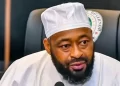
When Chief Timipre Marlin Sylva was appointed by President Muhammadu Buhari on Wednesday, August 21, 2019, as Minister of State for Petroleum Resources, many observers of the nation’s oil and gas sector were surprised. The former Governor of Bayelsa State who had played a leading role in the conceptualization and execution of the Amnesty Programme that brought about peace in the Niger Delta region did not have a reputation as an oil expert.
Five years on, Sylva who is also the Chairman of the Nigerian Content Development and Monitoring Board (NCDMB) has earned the respect of many stakeholders for the dexterity with which he has navigated the affairs of the critical ministry through significant challenges over the past three years.
In a highly politically environment, with powerful contending interests and despite the rigours of an economic recession that has adversely affected the economy, Sylva has notched up key accomplishments that have put the sector and the economy on a firmer pedestal to confront current challenges, derive more benefits for the country from the ongoing hydrocarbon reality and realize a strong foundation for the transformation towards a post oil future. His calm style and inclusive approach to leadership has earned the nation clear and measurable dividends.
The positive outcomes will not surprise those familiar with the minister’s personal philosophy. He is a very passionate about Nigeria and believes that with focus and clear targets, the country can make progress despite challenges. As he said in his Christmas message to staff and stakeholders, “We must stop the blame games and focus on how best we can collectively find lasting solutions to Nigeria’s problems”.
Notably, Sylva was also responsible for guiding the petroleum industry through the unprecedented crash in crude oil price in 2020 that happened due to the Covid-19 pandemic and which significantly affected the global consumption of crude products. For the first time ever the price of crude oil fell to below a dollar and had severe economic implications for the Nigerian economy.
Notwithstanding this development, the Minister was able to act decisively and implement reforms which has helped the industry and the economy as a whole to recover from the pandemic.
In a townhall meeting organized by the minister in January 2022, the ministry confidently declared that “The Ministry of Petroleum Resources had delivered on all the priority project areas assigned to the ministry by President Muhammadu Buhari”.
Below are some of his milestones achieved under his watch:
- Signing of the new Petroleum Industrial Bill (PIB)
The signing into law of the PIB was one of the 9-point agenda the Minister announced when he took office. On the 16th of August 2021, the landmark legislation became a reality as President Muhammadu Buhari assented to the bill which introduces important changes to the governance, administrative, regulatory and fiscal framework of the Nigerian Petroleum Industry. The bill is expected to restore sanity in the oil and gas sectors and boost investor confidence.
The idea of sweeping reform in the oil and gas sector started as far back as 2000 when the Olusegun Obasanjo inaugurated the Oil and Gas Reform Implementation Committee, with a mandate to review and streamline all existing petroleum laws and establish an all-inclusive regulatory framework for the industry. Eight years later, the first Executive Bill on the PIB was sent to the Sixth National Assembly however the bill was not passed. Similarly, in 2012 a revised draft was sent to the National Assembly and suffered the same fate. Another attempt was made in 2018 which saw the bill receive the backing of the National assembly but it failed to receive the President’s assent.
However in 2020 the PIB was sent to the National Assembly as an Executive Bill which sought to unbundle the Nigerian National Petroleum Corporation (NNPC). The bill (Section 54) proposed that the Minister of State, Petroleum, Timipre Sylva and the Minister of Finance should incorporate the NNPC Limited and determine the assets and liabilities that will be assumed by the new entity.
The signing of this bill puts an end to a 20-year period of unfruitful negotiation and stagnation in the petroleum industry. The projection is that the new law will be instrumental in enabling Nigeria achieve the audacious projection of 4 million barrels per production.
- Facilitating the creation of the Nigerian Oil and Gas Park
The Minister has also been supportive of the efforts to create a Nigerian oil and Gas Park at Odukpani, Cross River State. The ground breaking of the park was in 2018 and it is expected to be completed by the 4th quarter of 2022.
The goal of the park is to create an environment for low-cost manufacturing that would produce equipment components and spare parts that will be used in the Nigerian Oil and Gas industry. The completion of this project is also expected to benefit the national economy because it will help reduce the pressure around demand for foreign exchange for importation of equipment. It will also provide employment opportunities for hundreds of Nigerians.
The park also has a 10megawatts gas plant to power its operation and ensure sustainability. The creation of the park fits into a 10-year strategy roadmap aimed at raising in-country value retention in the oil and gas industry.
- Signing of Train 7 contract
The minister in collaboration with management of LNG was instrumental in the signing of the Train 7 contract. The Train 7 project is a joint venture consortium that seeks to boost Nigeria’s Liquified Natural Gas output. The contract provides for equipment procurement and Construction (EPC) and was signed despite the pandemic. The contract will bring about employment and development for the Nigerian people as 55 percent of the engineering activities will be carried out in Nigeria, 55 percent of all procurements will be done by competent Nigerian vendors and 100 percent of the installations and construction of Train 7 will be executed in Nigeria. The $7 billion project will support the federal government’s drive to generate more revenue from Nigeria’s confirmed gas reserves of about 200 trillion cubic feet and further reduce gas flaring in the country’s upstream oil and gas industry. The construction period is expected to last approximately five years with the first rundown expected in 2025. - Coordinating with international partners to promote Nigeria’s petroleum sector
The Minister has also been coordinating with international partners and other state actors to promote the Nigerian petroleum space. In 2021, he had meetings with representatives of China and Argentina. Also at the onset of the pandemic, the minister paid visit to some Organization of Petroleum Exporting Countries (OPEC) including Equatorial Guinea, Gabon, Congo Brazzaville and South Sudan to discuss issues around compliance cuts to help stabilize the price of oil. Mr. Sylva was chosen by the body to lead the delegation based on Nigeria’s performance in terms of compliance and management of oil production despite the economic challenges facing the country. - Push for the establishment of an African Energy Bank
The minister is an active campaigner for the establishment of an African Energy Bank to help improve investments in the oil and bank sector of the continent. According to him, since western nations are scaling down funding for hydrocarbon exploration across the world due to the race for renewable energies, setting up an African Energy Bank would be the only alternative available to African countries to continue to explore the vast hydrocarbon resources in the continent particularly since the continent is still largely dependent on oil and gas for the sustenance of its economy.
The broad idea is to create a funding source for all types of African energy. The energy bank would help develop and fast-track the energy needs and mix of different African countries including exploration of alternative and renewable energy.
- Increasing the Nigerian Content Intervention Fund to $350 Million
In June 2020, the Minister chaired the virtual NCDMB Governing Council meeting which approved the enlargement of the Nigerian Content Intervention Fund by $150 million. Part of the fund is set up to support the Intervention Fund For Women In Oil And Gas.
The intervention fund was set up to encourage participation of local businesses in the oil and gas sector and to build local capacity and competencies. It also aims to address the persistent funding challenges that have hindered capacity and growth of local service providers in the oil and gas sector.