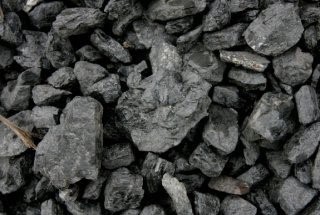
- We must look beyond hydro and thermal plants to have stable electricity supply
Why has it taken the Federal Government this long to decide on using coal to generate power in spite of its abundance in the country? This is the question that readily came to mind when the Minister of Mines and Steel Development, Dr Kayode Fayemi, announced that the government intends to revive mining in Enugu coal mines. But it is better late than never.
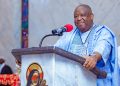
Fayemi made the disclosure during a town hall meeting with mining and steel sector stakeholders in the town. He had earlier visited the Okpara and Onyeama mines in the state, where mining last took place about 40 years ago. The minister said the Federal Government would conduct an audit of the mines as a prelude to the mining.
“Our priority is coal to power generation and it is already happening. We are not unmindful of the fact that Nigeria has very abundant coal reserves and we will make sure that this is developed. That is partly why we came to look at what is doable with the Okpara and Onyeama mines, and others,” Dr Fayemi said.
We commend the government for going ahead with the plan by the previous administration that had done extensive work on the issue. Usually, what successive governments do is to throw away the baby with the bath water for political reasons.
As the minister noted, the energy problem is an existential threat to the country and we must address it with what we have, and not necessarily in a way to please some external powers. The 10,000 MW that we plan to generate cannot take us anywhere if we are serious about industrialisation. It would seem the government has been reluctant to take this road because of the criticism of some western countries about the environmental impact of using coal to generate power.
Much as this is true, it does not tell the whole story. Many countries, including China, United States, Germany, Italy, India, South Korea and Japan, to mention a few, as recently as 2010 still had coal-powered stations. To date, South Africa generates a substantial amount of its electricity with coal. It is only in recent times that some of these countries have gravitated more towards gas to fire their plants.
There is no reason why Nigeria cannot use coal, in addition to the present hydro and thermal plants to generate electricity. Our experience has shown that the current template cannot take us far. If we are not having gas shortage; militants are rupturing gas pipes thereby disrupting supply to the power plants. With regard to the hydro electric sources, the country is stranded once the rains are over. For how long are we to continue with this rigmarole? The fact is; coal is cheaper; we also have it in abundance. What we should do is to manage the environmental challenges that could arise from using it instead of abandoning it completely.
If the World Bank is not favourably disposed to this idea for whatever reason, so be it. The government should take advantage of its partnership with the African Development Bank (AfDB) which is more sympathetic to our cause. The western countries cannot use a ladder only to remove it when they have got to the top.
We must warn, however, that the Federal Government should adequately compensate residents who have to swallow the “bitter pills” of relocating when mining commences in the sites. As the minister himself noted, “when you tell people to relocate from where they have lived for more than 30 years, you know how it feels …”
This is imperative to avoid the ugly experience the country is having in the Niger Delta. Ordinarily, mining should be in the residual list, that is it should be an exclusive preserve of state governments but for our lopsided federalism. To get the best from the deal if it comes to be, the government must be prepared to undertake the necessary investment in the people to be relocated.