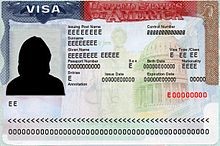
As part of efforts to boost the Nigerian economy, by opening up the business space, the Federal Government has reviewed the visa processes for prospective foreign investors and tourists.
The whole essence of the new visa policy is to remove bureaucratic bottlenecks and encourage business travellers and tourists into the country. Minister of Information and Culture, Alhaji Lai Mohammed, who made the announcement on February 26, said the measures were part of the action plan for the ease of doing business as well as efforts to boost tourism.
“The Nigeria Immigration Service (NIS) has reviewed the requirements for Nigerian visas to make them more customer friendly… Types of visas currently reviewed include Visa on Arrival (VoA) processes, Business Visas, Tourist Visas and Transit Visas,” the minister said.
The Visa on Arrival, according to Mohammed, is a class of short visit visa issued at the port of entry, and it is available to frequently-travelled High-Net- Worth Investors and intending visitors who may not be able to obtain visa at the Nigerian Missions/Embassies in their countries of residence due to the absence of a Nigerian mission in those countries or exigencies of urgent business travels.
The minister said other actions that have been taken by the NIS for the ease of doing business and facilitation of travelling for Nigerians and foreigners alike include the harmonisation of multiplicity of Airport Arrival and Departure Form/Cards into a single form for all agencies of government, to save foreign visitors from the current frustrating practice of filling three different forms or more, and the decentralisation of immigration services to the state commands.
The measures fit into the 60- day national action plan for ease of doing business in Nigeria. The plan was recently approved by the Presidential Enabling Business Environment Council (PEBEC).
Through PEBEC, the Federal Government is looking at three broad areas to improve ease of doing business: entry and exit of goods; entry and exit of people, and transparency and procurement in government agencies and parastatals. No doubt, these measures are commendable at a time the nation’s economy is ailing. Stories abound of how difficult it is for foreigners to get Nigerian visas outside the shores of the country.
There have been reports of Nigerian Embassies’ officials deliberately or inadvertently frustrating prospective investors and tourists in the procurement of visas. Given the dwindling economy, the central government has taken a right decision by easing access to Nigeria with regard to the visa policy.
It is only when there are no bureaucratic bottlenecks that more foreign investors and tourists will be able to come into the country. While we commend the central government for this initiative, we advise that it should do more by providing the enabling business environment for investors, both local and foreign.
It is not just making access into Nigeria easy for investors and tourists; the ultimate is to make the country investment friendly and attractive to tourists. Investors and tourists place premium on security.
The government must ensure that adequate security is in place across the country. At present, no serious tourist and investor will be encouraged to move into the Northern part of the country, yet there are so many investment opportunities and tourist attractions in the North.
The Mambilla Plateau in Taraba and Yankari Games Reserve in Bauchi are just two examples. Just imagine the tales of German archaeologists abducted and freed recently in Kaduna.
What would they tell their fellow countrymen? The security challenges are not limited to the North. In the South, there are cases of abductions and other crimes.
Yes, the military has tried in decimating the terrorist Boko Haram, although there are still pockets of attacks by the group, more work still needs to be done. So, we call on the Federal Government to scale up the security situation across the country.
It is only in a secured environment that business thrives. Today, many business concerns have closed shops because of infrastructural challenges in the country.
The worst of it is power. Many business owners spend fortunes to generate power to run their operations due to the abysmal power supply by the electricity distribution companies (DISCOs).
So, government must aggressively tackle the power challenge so that its efforts in regard to the ease of doing business will be meaningful. It is easier to attract investors through visa policy and other incentives, but keeping them is most important.
Sustaining the influx of investors and tourists through enabling environment, effective security, and solid infrastructure, especially power and roads, should be paramount to the government. Government must effectively monitor the implementation of the new visa policy so that its officials don’t circumvent the processes