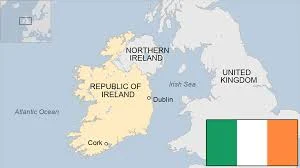
Ireland has expanded its employment permit system in a major policy move aimed at attracting more international workers and addressing ongoing labour shortages across key sectors, including construction, healthcare, transport and agri-food.
The government confirmed 32 changes to the employment permit framework following a comprehensive review of occupation lists that began in summer 2025.
In a post obtained from Ireland’s Department of Enterprise, Tourism and Employment’s website on Monday, the Minister for Enterprise, Tourism and Employment, Peter Burke, said the update is designed to make it easier for employers to recruit overseas workers where domestic skills shortages persist.
The changes are intended to ease recruitment pressures in sectors linked to housing delivery, healthcare provision, infrastructure development and food production.
Under the new framework, six occupations have been added to the Critical Skills Employment Permit list, nine roles have been made eligible for General Employment Permits without quotas, two occupations will now be subject to new quota limits, and 15 existing quotas have been renewed.
Burke said: “The changes take effect immediately and are designed to respond to persistent labour shortages across priority sectors while maintaining safeguards within the employment permit system.”
The government has also approved steps to amend the Employment Permits Act 2024 concerning the so-called “50:50 rule,” which requires employers to ensure that at least half of their workforce are UK or EEA nationals. The review follows concerns about staffing pressures in the health and social care sector.
He said flexibility is particularly important in areas such as healthcare assistants, nursing homes, disability care and homecare services to ensure continuity of care delivery.
Speaking on the reforms, Burke said: “I am delighted to announce these changes today to our employment permit system. These adjustments strengthen the agility and responsiveness of the system, while upholding safeguards such as minimum annual remuneration thresholds, quota management and standard permit terms and conditions.”
He added: “The additions to the Critical Skills Occupations List will support the sourcing of highly skilled international workers across construction, infrastructure, intellectual property and healthcare sectors.”
Burke highlighted construction-related additions, including Construction Planner/Scheduler and Geospatial Surveyor, saying they would support Ireland’s housing and infrastructure ambitions under the National Development Plan.
He also confirmed that five additional construction roles—Plastic Lining Technicians, Steel Fixers, Fencing Operators/Erectors, Curtain Wallers and Concrete Pump Operators—have been added to the General Employment Permit system.
On his part, the Minister of State with Special Responsibility for Retail, Small Businesses and Employment, Alan Dillon, said the reforms reflect a coordinated and balanced approach to labour market policy.
“These changes will promote a whole-of-government, integrated approach to driving responsive economic migration policy and addressing labour and skills shortages as they arise,” he said.
Dillon added: “We are supporting a balanced approach that addresses short-term labour shortages while reinforcing the State’s commitment to long-term domestic skills development.”
He further noted that quotas would remain in place for lower-skilled roles to ensure migration supports, rather than replace, domestic training, apprenticeships and upskilling efforts.
The ministers said the updated system aims to provide employers with greater certainty in recruitment planning while ensuring Ireland’s labour market policy remains responsive to economic needs and long-term workforce sustainability.