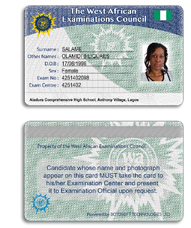
The Federal Government has issued unique Learner Identification Numbers (LIN) to over 1.9 million candidates registered for the 2026 West African Examinations Council (WAEC) and National Examinations Council (NECO) examinations as part of efforts to strengthen data management and curb examination malpractice.
The initiative provides each student with a permanent academic identity to enhance data management, monitor academic progress, and strengthen the integrity of public examinations.
Minister of Education, Maruf Tunji Alausa, described the development as a milestone aligned with the Renewed Hope Agenda of Bola Ahmed Tinubu, noting that the system will support learning continuity and ensure no child is left behind.
The LIN is structured to capture key student data, including location and school details, enabling seamless tracking even when learners transfer. It is also expected to curb impersonation in exams and enhance verification processes.
“This initiative marks a turning point in our education system. By assigning every learner a unique number, we are building a structure that supports each child’s journey from classroom to career, while ensuring that no one is left behind,” the Minister stated.
Built on the Digitised National Education Management Information System, the platform links students to verified schools nationwide, each assigned a unique identification code.
Beyond examination integrity, the system will help government identify out-of-school children, monitor dropouts, and address learning gaps through targeted interventions.
The platform is fully digital, publicly accessible, and environmentally friendly, reflecting a major milestone in modernising Nigeria’s education system.
The ministry further said the next phase will expand the initiative to cover all learners in both public and private schools, urging stakeholders to support full implementation.