Former President Goodluck Jonathan’s damning, but accurate, observation that Nigeria records the lowest voter turnout among the many elections he has monitored across Africa and beyond should trouble every patriot. It is even more alarming now that the country is preparing for another general election cycle next January.
This is not merely an electoral concern; it is a national setback that demands urgent and radical intervention.
For a leader who has monitored elections in more than 15 countries since leaving office in 2015, Jonathan’s verdict is more than a lamentation. It is a grim diagnosis of a democracy steadily bleeding public confidence.
Concerted efforts must therefore be made to reverse the trend before voter apathy fatally undermines the 2027 elections.
Nigerians face a defining choice next January: either transform the polls into a democratic turning point or continue with the ruinous cycle of business as usual.
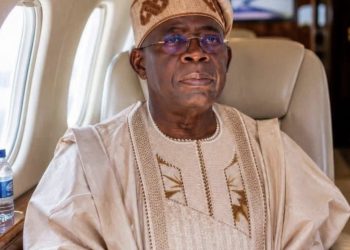
Jonathan said, “I have observed elections in about 14 African countries and some more than two times and some countries in South-East Asia. Nigeria has the lowest turnout in elections in every election cycle.
“We have the worst voter apathy. It seems people are not even interested in their elections. We have the least (participation). I have never been to a country with the low numbers that we have. INEC needs to study it and find out what is wrong, what is the cause, and do something about it.”
The roots of voter apathy in Nigeria are deep and corrosive: vote buying, electoral violence, rigging, falsification of results, voter suppression, constitutional loopholes, INEC incompetence, politicians’ desperation, and the often-indifferent posture of security agencies.
Together, these failures reinforce the dangerous perception that votes do not count, pushing citizens away from the ballot box.
Low voter turnout has become a national malaise. The 2023 general elections produced perhaps the bleakest electoral profile in Nigeria’s democratic history.
Although 87.20 million voters collected PVCs out of the 93.46 million who registered, largely for identification purposes rather than civic participation, only 24.9 million voters, representing 26.72 per cent, eventually voted in the presidential and National Assembly elections.
That was the lowest turnout since 1999. President Bola Tinubu assumed office with 36.61 per cent of the votes cast.
INEC data shows that voter turnout in general elections has declined steadily since 2007.
According to the electoral umpire, voter turnout stood at 57.54 per cent in 2007, fell to 53.68 per cent in 2011, dropped further to 43.65 per cent in 2015, slid to 34.75 per cent in 2019, and crashed to 26.72 per cent in 2023.
The trend is equally disturbing across the states.
In Anambra State, off-season governorship elections have mirrored the same downward spiral as turnout fell from 68 per cent in 2007 to 16.33 per cent in 2010, rose slightly to 24.98 per cent in 2013, dipped again to 21.74 per cent in 2017, and collapsed to just 10.38 per cent in 2021, the lowest in the state since 1999.
The record in Ondo State is hardly different. INEC reported turnout figures of 42.4 per cent in 2007, 38.1 per cent in 2012, 35.3 per cent in 2016, 32.6 per cent in 2020, and only 24.8 per cent in the November 16, 2024, governorship election, another historic low.
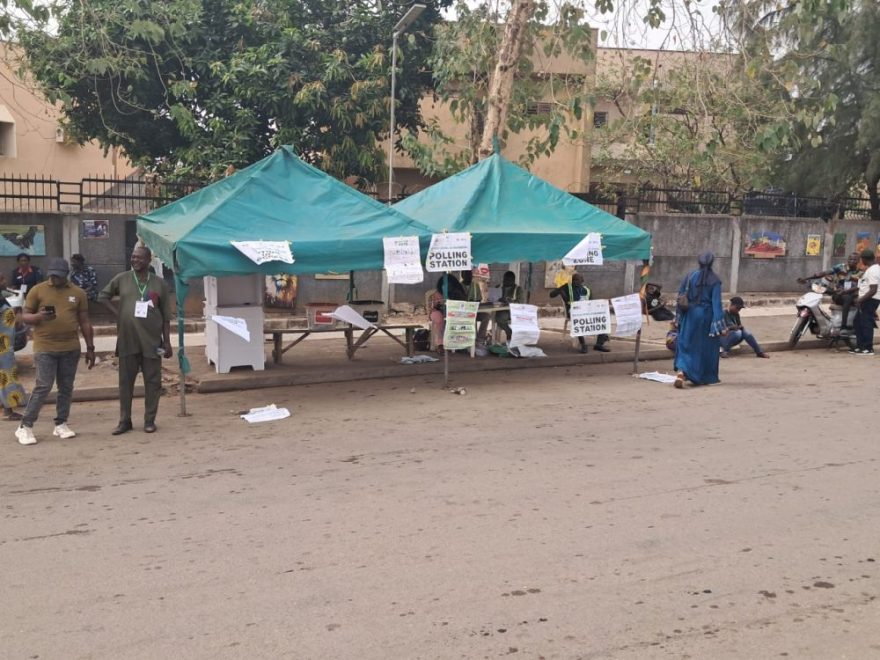
The same story of voter apathy played out during the February by-elections conducted across 12 states, where only 3,553,659 registrations were recorded across 32 local government areas, 356 wards, and 6,987 polling units to fill just 16 positions.
Low participation also dogged the Continuous Voter Registration exercise conducted by INEC in September.
According to the commission, five weeks into the exercise, Southern Nigeria recorded 1,998,082 online registrations and 209,308 physical registrations, while the North recorded 3,190,007 online registrations and 182,588 physical registrations.
Most troubling is that the nation’s democratic fault lines are widening as the 2027 elections approach.
Insecurity remains pervasive. The multi-party system is increasingly giving way to the spectre of one-party dominance. Vote buying is becoming more brazen. Opposition parties are in disarray. Urgent and deliberate measures must therefore be taken to halt the drift.
While INEC must simplify voter registration and PVC collection to encourage participation, governments, the National Orientation Agency, civil society organisations, and the media must intensify voter education and mobilisation so that Nigerians troop out in unprecedented numbers to make the 2027 elections a watershed for improved governance.
The ruling of the Federal High Court in Abuja in a suit filed by Ephraim Okoye, an eligible voter in the 2023 elections, has now opened a crucial democratic window for citizens to defend their votes and challenge dubious election outcomes.
The court held: “Every Nigerian or voter has locus standi to challenge and hold the defendant (INEC) accountable for the advancement of democracy and sanctity of our electoral system.”
Okoye earned the commendation of the court for voting and waiting “for collation, which was done, he snapped the same, endured sun, rain and even rented a canopy to ensure accountability.”
Now that the judiciary has affirmed the right of every voter to hold INEC accountable and insist that votes count, Nigerians, especially the youth and the middle class, must seize the opportunity.
They must make the personal sacrifice to register, collect their PVCs, vote, stay behind to monitor collation, and challenge fraudulent results in court where necessary.
At a time when Nigeria appears to be drifting dangerously toward a one-party state, a development that could deepen voter apathy even further, the responsibility for reversing the trend has been placed squarely in the hands of the electorate.
Voters must therefore utilise that power wisely by coming out en masse to support candidates of their choice.
Nigerians must resist the suppression of their votes through vote buying, rigging, intimidation, and every other form of electoral misconduct by vigilantly policing the process.
Security agencies must also discharge their responsibilities professionally and prevent violence and intimidation by political thugs.
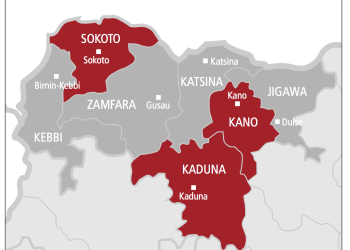
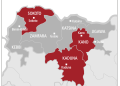
The police, in particular, must not permit a repeat of the disgrace witnessed during the 2025 by-elections, when at least 288 thugs armed with weapons were reportedly arrested across four LGAs in Kano State.
INEC, under Joash Amupitan, carries a sacred responsibility to conduct the 2027 elections professionally and transparently.
The commission should flush out undesirable elements within its ranks and eliminate the familiar complaints of poor logistics, technological failure, and result manipulation.
The electoral body should work with aggrieved candidates to investigate cases of misconduct and help victims of electoral fraud obtain justice instead of hiding behind technicalities to obstruct it.
INEC’s temperament and body language must inspire confidence that votes will genuinely count this time.
Its responsibility is to the Nigerian people, not to political actors. Politicians must stop weaponising elections, while the government must stop militarising them.
Opposition parties, too, must put their houses in order and present credible alternatives capable of inspiring public confidence.
Nigeria should align itself with the growing wave of credible elections across Africa. It should emulate countries such as Liberia, Senegal, and Ghana in delivering elections that are free, fair, credible, and peaceful.
There is also an urgent need to democratise and simplify the electoral process through innovations such as pre-voting and mail-in voting to reduce the crushing cost and logistical burden of elections.
Ultimately, the people remain the most important element in any democracy. They own democracy and determine who governs them through elections.
Any electoral process that deliberately undermines the people is not merely weakening democracy; it is actively killing it.