THE weeks ahead might be potentially loaded with thorny challenges of how to defend and promote Nigeria’s hard-won democracy. But it bodes ill that instead of the Nigerian military harvesting all their vigour in promoting national interests by being professionally dispassionate in their electoral role, they have chosen to tread the dodgy path of lending their coercive power to partisan interests. Apart from being used to achieve a perilous temporary postponement in the conduct of the general elections, soldiers and Armoured Personnel Carriers were again deployed in private residences and Government Houses of some leading opposition political figures last week. This tactical assault, reminiscent of the days of the jackboot, may lead to ugly consequences.
In spite of their pledges not to get involved in party politics, there are worrying signs that the top echelons of the Nigerian military are trading off the integrity and professionalism of their agencies for mundane rewards. Unmistakeably, the action is intimidation and invasion of the democratic space in the guise of maintaining law and order.
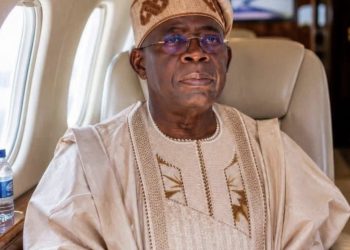
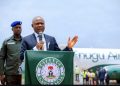
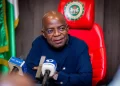
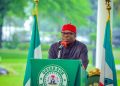
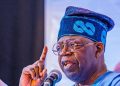
Recent victims of this perfidious bullying are some leading members of the opposition, including Bola Tinubu, a leader of the All Progressives Congress; Garba Shehu, the media campaign director of the APC presidential candidate, Muhammadu Buhari; and Governor Rochas Okorocha of Imo State, whose residence, Government House, Owerri, was blocked by soldiers and a military tank. This is not only risky for our democracy, it will further worsen the military’s legitimacy crisis. Military chiefs who make themselves available for such sinister objectives and political manipulations are guilty of conduct unbecoming of officers and gentlemen.
But the situation seems headed for the worse, with the APC claim last week that the telephone numbers of Tinubu, Governor Chibuike Amaechi of Rivers State, who is the Director-General of Buhari’s campaign, and John Odigie-Oyegun, the party’s National Chairman, had been bugged.
It is curious that these jackboot tactics came in the wake of APC leaders’ laceration of the military for their role in the much-criticised polls shift, earlier scheduled for February 14 and 28, but which have now been moved to March 28 and April 11. The Chairman, Independent National Electoral Commission, Attahiru Jega, has not left anyone in doubt that he acted at the behest of the military high command as they could not guarantee security.
The military’s action is sheer perfidy. Countries such as Syria, Iraq, Afghanistan, Ukraine and even Mali, with far worse security situations, had held elections without the military dragging their boots on the slippery and murky political terrain. Apart from the opposition, some critics reason that what is unravelling might foster conditions propitious for the polls to be rigged.
It is shameful that a military already decimated by retirements, court-marshalling of combatants and desertion would immerse soldiers in matters outside their constitutional remit. Interestingly, the military have lost their voice in offering a plausible explanation, save the naive defence of “routine” steps taken to secure Lagos, made by the General Officer Commanding, 81 Division of the Nigerian Army, Tanmi Dibi. But in case Dibi has forgotten, such security schedule belongs to the Nigeria Police.
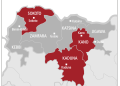
Our present national security challenge dictates that these soldiers have just one place to be: the battle zones in Adamawa, Yobe and Borno states, defined by the Islamic insurgents against the country. It is the abuse of soldiers such as this that has vitiated the strength of our fighting force in the North-East. This jihadist campaign in the area has raged for six years, decimating civilians, paramilitary personnel and soldiers as well as rendering over 981,416 Internally Displaced Persons, since 2009, according to the National Emergency Management Agency.
President Goodluck Jonathan, the Commander-in-Chief, will do himself and our democracy a lot of good by being abreast of our contemporary history – the military’s entanglement with politics has never augured well for the country and its stability. The National Party of Nigeria’s misuse of Mobile Police to perpetuate its reign during the Second Republic, backfired. Such recidivism in 2007 produced the worst election ever conducted in the world, according to international observers.
Since the eerie security situation in the North-East was the alibi used to adjust the election timetable and the military support from Chad, Niger and Cameroon has gained more traction, the military, therefore, should have an overwhelming presence of the combatants in the troubled states and not in the landing of politics.
Indeed, the current travails of the opposition are similar to the clampdown on critical media in June last year. Soldiers and Department of State Services operatives seized and tore copies of The PUNCH, The Nation, Daily Trust and Leadership, under the guise of acting on an “intelligence report.” Their charge was that “materials with grave security implications” were being moved across the country, using the distribution networks of these newspapers. The claim was sheer nonsense as nothing incriminating was found.
It is time for the military to rethink their strategic role in politics. It has been argued that providing security during elections is primarily the responsibility of the police and the civil defence corps, with the military only being required to support these agencies in accordance with the Electoral Act. Their role in democratic elections, therefore, must not go beyond the assignments the electoral umpire, this time, INEC, allocates to them.
To save this democracy, the military should retrace their steps from our murky political terrain and confine themselves only to their statutory role of defending Nigeria’s territorial integrity. Service chiefs need to respect and develop the professional capacities of their agencies and promote the autonomy of the military as an institution.