The Nigeria Union of Teachers (NUT) has demanded that the retirement of teachers of primary and secondary schools in the country be raised from 60 to 65 years.
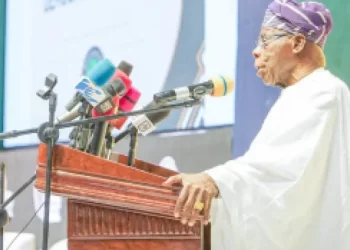
The National President of NUT, Mr Michael Olukoya, made the call at the 2017 World Teachers’ Day celebration in Abuja on Thursday.
The theme of this year’s day is: “Teaching in Freedom, Empowering Teachers’’.
Olukoya said that the retirement age for tutors in the Colleges of Education, Polytechnics and Universities was extended to 65 and 70 respectively.
He said that doing the same with the primary and secondary schools would remove the segregation since they all belonged to the same teaching industry.
“The more years a teacher spends on the job, the better he delivers his service to the learners given the benefit of the experiences gathered over the years and the wisdom of age.
“The older the teacher, the more caring and tolerant he is to the students with improved dexterity in the pedagogy of teaching required over time.
“It is for this and other similar reasons that the retirement age of lecturers and professors in the tertiary institution was extended to 65 and 70 years,’’ he said.
The NUT president also called on the Federal Government to look into the plight of primary and secondary school teachers across the country arising from the non payment of their salaries and allowances for several months.
He said that as at the end of September, primary and secondary school tutors were owed between two and 11 months salaries in 17 states in the country.
He decried that this was becoming worrisome.
“Some state government has since adopted the inhuman act of paying monthly salaries in fractions without any guarantee that the remaining part of the salaries will be paid to the teachers.
“In the same vein, promotions are yet to be implemented for teachers for two to eight years in some states.
“This situation has brought untold hardship to the affected teachers and has expectedly taken its toll on public education with its attendant effect on the under-privileged children’’.
He called on state and local government to effect payment of the backlogs of salaries and other entitlement owed teachers without further delay.
On the issue of grade level of graduate teachers, Olukoya said that graduate teachers in the primary and secondary schools were meant to terminate on GL 14 and 16 respectively in some states of the federation.
He said that this was an act of discrimination which was unacceptable, while calling for justice, equity and fair play.
He called on relevant authority to extend the terminal grade level of graduate teachers of both primary and secondary schools to grade levels 17 as obtainable with other graduates of public servants.
He, however, urged the Ministry of Education to facilitate the development of a comprehensive scheme of service for primary and secondary school teachers.
Meanwhile, Professor Josiah Ajiboye, Registrar, Teachers Registration Council of Nigeria (TRCN) says a good training for teachers would help rebuild the country’s educational system.
Ajiboye said this at the Teachers Day Symposium to commemorate the 2017 World Teachers Day in Abuja on Thursday.
The theme for this year’s celebration: “Teaching in Freedom: Empowering Teachers for the 21st Century Challenges’’.
According to him, a survey conducted in 2010 revealed that there were 207,818 unqualified teachers in the primary schools.
“The North-East zone had the highest figure of 57.7 per cent. Undoubtedly, the situation degenerated with invasion of the insurgents.
“The North-West had 46.8 per cent; North-Central 38 per cent; South-South 19.2 per cent; South-East 16.7 per cent and South-West 6.7 per cent.
“An experiment in some states in 2014 also revealed that 1,300 out of 1,599 state teachers failed arithmetic and basic literacy tests by scoring below 25 per cent ’’
Ajiboye added that 259 teachers in another state among who were university graduates flunked a test meant for primary four pupils in 2008.
He said all these were adding to the problems of ascertaining the quality of teachers in Nigeria.
“The quality and quantity of teachers demands a strong policy response.
“Rebuilding the system should take into account how the once cherished vocation, the mother of all professions should attract the best brains and retain them.
“Professional training is critical, just as mastery of subject matter, teachers’ welfare and an environment that promote learning.
He, therefore, called on the Federal Government to create a more conducive environment to enable teachers practice their profession.
Ajiboye noted that many countries had not come to terms with the crucial strategic role that teachers play in the society.
He also called for adequate motivation for teachers as well as a well paid salary as most states owed their teachers between six to nine months salaries.
The World Teachers’ Day has been celebrated worldwide annually on Oct. 5 since 1994.
It was initiated by UNESCO as a proclamation to celebrate the great step made for teachers on Oct. 5, 1966 at a special intergovernmental conference in Paris, France.