Nigeria’s latest wave of rolling blackouts, attributed to gas shortages at thermal power stations, has once again exposed the grim truth that the country’s electricity sector is fundamentally broken.
From Lagos to Kano, from Enugu to Sokoto, households and businesses are enduring days without power, sweltering nights without relief, and an economy steadily suffocating under the weight of energy failure.
Data from the Nigerian Independent System Operator underscores the severity of the crisis.
As of March 17, 16 out of 33 power plants were not supplying electricity, dragging generation down to just 3,705 megawatts. This is not a routine disruption. It is an economic emergency.
At a time when the Bola Tinubu administration touts improved macroeconomic indicators—exchange rate stability, rebased GDP figures, and rising reserves—the lived reality for millions of Nigerians tells a different story.
Macroeconomic gains cannot mask microeconomic hardship. Growth figures are hollow when factories cannot run, small businesses cannot survive, and households spend more on fuel than on food.
Nigeria today generates less than 5,000 MW of electricity for over 235 million people. On some days, output dips even lower, occasionally approaching zero during grid disturbances.
Per capita electricity consumption, estimated at 140kWh-181kWh annually in recent years, is among the lowest in the world, and far below the African average of 617kWh.
By comparison, Egypt consumes over 1,500kWh per person, South Africa about 3,779kWh, and Brazil over 3,200kWh, while developed economies exceed 10,000kWh.
Yet about 9,000 MW remains stranded at power plants because the antiquated radial grid can only wheel a third of the installed capacity, estimated at 16,000MW
The implications are disturbing. Manufacturers are forced to generate their own power at exorbitant costs. Nigerian businesses and households spend more than $20 billion annually on diesel and petrol generators.
Even solar alternatives remain out of reach for many, with a modest 5kVA system costing between N4 million and N6 million, well beyond the means of most households.
In effect, Nigeria operates a “shadow grid” generating between 14,000MW and 20,000MW, far exceeding the national grid, but at a higher cost and with far greater inefficiency.
The Manufacturers Association of Nigeria reports that energy costs now account for 35 to 40 per cent of production expenses for many firms, eroding competitiveness, inflating prices, and forcing closures.
For SMEs, unreliable power is often a death sentence. For households, it means paying twice for electricity, once through estimated bills and again through generator fuel. The result is a brutal squeeze on incomes, productivity, and quality of life.
The government’s explanation of gas shortages is both valid and insufficient. Nigeria sits atop more than 200 trillion cubic feet of gas reserves, yet it cannot reliably supply its power plants. This contradiction points to deep structural dysfunction.
Generation companies claim they are owed about N6.8 trillion, though the government disputes this figure, putting it closer to N2.8 trillion.
Distribution companies recover barely 70 per cent of billed revenue. The result is a liquidity crisis that cripples the entire value chain.
Gas suppliers, unpaid and wary, cut supply. Thermal plants, responsible for roughly 70 per cent of Nigeria’s electricity, scale down operations. Blackouts follow.
Joy Ogaji, CEO of the Association of Power Generation Companies, recently warned that operators can no longer maintain their plants amid funding constraints. This should surprise no one. It is the predictable outcome of years of policy inconsistency, weak regulation, and half-hearted reform.
Nigeria’s power crisis did not begin today. The administration of Olusegun Obasanjo reportedly spent about $16 billion on power projects with little to show for it, missing its 10,000 MW target by 2007.
The 2013 privatisation under Goodluck Jonathan promised efficiency and investment but delivered a fragmented and dysfunctional system.
GenCos remain undercapitalised. DisCos are inefficient and reluctant to invest in infrastructure. The government-controlled transmission network is outdated and fragile.
More than a decade later, privatisation has only transferred ownership without delivering competence.
Tariffs remain politically constrained and often non-cost-reflective, creating a chronic funding gap.
DisCos suffer massive technical and commercial losses, estimated at nearly 50 per cent, while inadequate metering fuels distrust and revenue leakages.
Attempts to introduce premium “Band A” tariffs have descended into farce, with customers paying more for power they do not receive.
The result is a vicious cycle: low tariffs lead to low revenue, low revenue leads to underinvestment, underinvestment leads to poor service, and poor service fuels resistance to reform.
Nothing better illustrates Nigeria’s penchant for grand promises and poor execution than the Siemens-backed Presidential Power Initiative.
Designed to deliver 25,000MW by 2025, the project has fallen dramatically short. Instead of a stable supply, Nigerians have witnessed frequent grid collapses, over 230 partial or total failures between 2010 and 2025.
The initiative focused heavily on transmission upgrades while neglecting the deeper issues of generation capacity, gas supply, and distribution inefficiencies. It was a technical solution to a systemic problem, and it has failed accordingly.
Perhaps the most striking symbol of government disconnect is the decision to spend N10 billion on a solar mini-grid for Aso Rock Villa. While millions of Nigerians sit in darkness, the seat of power is insulating itself from the very crisis it has failed to resolve.
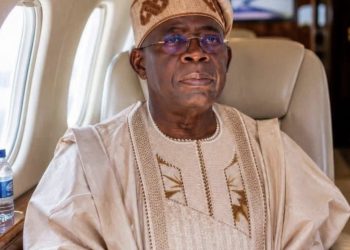
During the 2023 election campaign, Bola Tinubu vowed to fix electricity within his first term, asking Nigerians to deny him a second term if he fails. Yet, with just 14 months to go, the opposite appears to be the case.
Rather, the Presidency is securing uninterrupted power for itself while Nigerians remain in the dark.
This is as ironic as it is indefensible. It simply underlines the contempt in which ordinary Nigerians are held by their leaders.
Still, the administration’s ambition to build a $1 trillion economy by 2030 is laudable, but without reliable electricity, it is unrealistic. Industrialisation requires power. Digital economies depend on it. Education, healthcare, and agriculture all rely on stable electricity.
Without power, Nigeria cannot compete. Investment will continue to flee. Jobs will remain scarce. Poverty will deepen.
Yet Nigeria’s predicament is not unique, and certainly not inevitable.
Egypt transformed its power sector within a decade through aggressive investment, disciplined policy execution, and credible partnerships, including with Siemens. The country moved from chronic shortages to surplus capacity.
The lesson is straightforward: success requires political will, coherent planning, and sustained execution.
Nigeria has the resources, including vast gas reserves, abundant sunlight, capital, and human talent.
What it lacks is coordination, accountability, and urgency.
Resolving the crisis demands more than rhetoric. Nigeria must address the liquidity crunch by settling verified debts owed to GenCos and gas suppliers transparently, while ensuring that new debts do not accumulate.
Tariffs must be cost-reflective, with targeted subsidies for vulnerable consumers, while DisCos must be compelled to invest in infrastructure and metering. Those who fail should have their licences revoked for underperformance.
Crucially, the transmission network must be modernised and decentralised into regional grids with redundancy and smart control systems to reduce system-wide failures.
The 2023 Electricity Act must be fully implemented to enable state-level electricity markets, fostering innovation and attracting private investment.
Private GenCos must be encouraged to power homes and businesses directly through mini-grid networks.
Lastly, gas supply must be secured through enforceable contracts, improved infrastructure, and credible payment guarantees.
Nigeria’s power crisis is no longer merely a technical challenge; it is indeed a test of governance.
If Tinubu leaves office without fixing the electricity sector, his broader economic reforms will rest on a fragile foundation. Infrastructure is the backbone of development. Without power, there can be no sustainable growth.
Therefore, the choice is to continue managing failure or confront it decisively. For the millions of Nigerians languishing in darkness, the answer cannot come soon enough.