There is no doubt that the future of Nigerian children is being sacrificed and mortgaged on the altar of dysfunctional governance orchestrated by some state governors. Apparently, this is traceable to the attitude of some governors in providing for the developmental needs of the children, especially their education, which is the basis for laying and building a solid foundation for their future.
This untoward attitude not only calls for questioning, it is also suggestive of lack of foresight and direction, essentially of our political leaders to shape the future of the nation today. For whatever situation, the expected future of the younger ones, which should be paramount in the scheme of national development, greatly depends on the conscious attention accorded the laying of the foundation for solid education and other social needs in all ramifications necessary, as the children grow up.
Certainly, any default necessitated along that process will go a long way in hampering and truncating whatever remains of their tomorrow, especially in a nation like Nigeria, where government, as a critical element in the growth and development of the children, lacks the temerity to provide and meet those fundamental needs.
Therefore, given the scenario of these deficiencies and particu-larly the failure of governance, which ordinarily is all about the welfare and concern for the people, based on the resourcefulness and accountability of the leaders, the future of these children inadvertently is being put on the rope.
In fact, many students will miss their admission into higher institutions this year in some states owing to the failure or refusal of their governments to pay the West African Examinations Council (WAEC) and the National Examination Council (NECO) registration fees for the Senior School Certificate Examination (SSCE) and for which the examination bodies withheld the results of candidates in the affected states.
For instance, states such as Kano, Bayelsa and ten others, whose candidates’ SSCE results were seized by WAEC over nonpayment of the students’ registration fees, were said to have two weeks ago, paid the registration fee, when most of the universities had already closed their admission portals for the 2016/2017 academic session.
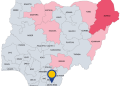
In the meantime, the case of Niger State deserves special mention, although the parents paid the registration fees for either WAEC or NECO, as directed by the state government, which agreed as part of its free education policy to pay the one the parents did not pay for, the same government refused to remit the fees paid by the parents to the examination bodies.
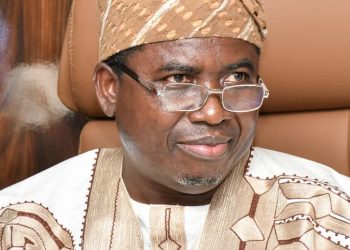
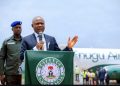
Due to the non-chalant posture of the state government, led by Governor Abubakar Sani Bello towards the education of the children, the seizure of the candidates’ results following government’s inability to pay the fees has denied the candidates opportunity to process their admissions into tertiary institutions this year.
As part of its admission of failure, the governor announced the withdrawal of state government’s assistance to the students and their parents by cancelling the N800 million it spends yearly on registration fees for candidates in public secondary schools across the state.
The governor had said: “We must review the issue of the payment of NECO and WAEC fees because at the moment, the state is owing NECO and WAEC about N800 million. It is appalling that government is spending that huge amount of money on students who could not obtain credit in four subjects in the examinations, as only about five per cent of students obtained credit in four subjects and above.”
According to the state Commissioner for Education, Hajiya Fatima Madugu, the current financial challenges have prompted the state government to withhold funds meant for the payment of the children’s registration fees. Government has every right to re-plan its strategies, the concern of every discerning mind is that any government that is responsive to the educational needs of its citizenry should make education number one priority.
Education of the people should not be allowed to suffer at the detriment of other social services, given the critical role of the sector as the fulcrum of development, and its place in the Human Rights, which makes education an inalienable right of every child and which must be provided by the state.
These state governments have erred in this direction and they should without further delay admit their wrong doing by providing funds to pay the examination bodies for the children to access their results.
Failure to do this will amount to a deliberate action on the part of the affected state governments to compromise the future of the children and jeopardise the future development of their respective states and by extension, the country at large. Any governor, who, for whatever reason or reasons, does not value education of the children and is openly exhibiting such retrogressive tendencies, does not deserve to lead the people.