These are truly trying times for Nigeria as a nation. Within a period of five weeks, the country wallowed in triple political-economy problems that are as serious as they are inter-related. First, between June and November, 2014, oil prices plummeted by nearly 45 per cent to a five-year low. Brent crude price is still oscillating in the international market and has fallen to a half-decade low of $67.53, while the fundamentals suggest further decline are strong. The recent price-shoring attempt by the Organization of Petroleum Exporting Countries (OPEC) at its recent emergency meeting in Vienna, Austria, was stalemated due to divergent issues and circumstances affecting member and non-member states. There exists the conspiracy theory that but for the crippling economic embargoes imposed by the United States, the European Union and Japan on a strategic non-member, Russia, an OPEC production cut would have been possible. But it didn’t happen and wouldn’t happen soon as the low oil prices appear a last-lap recovery recipe for the developed world’s economic recession that commenced in 2008.
Some of the factors behind falling oil prices include the abundance of low sulfur shale oil (rivaling Nigeria’s Bonny Light) in the United States, a country that drastically scaled down its oil imports from Nigeria by nearly 93 percent between 2010 and 2014. It is an understandable fact that transcends insincere politics that Nigeria, which in every sense of the word is a totally resource dependent nation, should suffer the implications of the lingering oil price slump, which is also scorching other countries like Russia, Venezuela and Malaysia very hard.
Second, after a lost run in its quixotic attempt to shore up the value of the naira, the Central Bank of Nigeria (CBN) capitulated and allowed a controlled, monitored fall that brought the naira to a record low of N184.05 to the dollar in the inter-bank market. Contrary to the dictates of a free market economy, the apex bank is still keeping a wary-eye on the currency’s deterioration in order to keep inflation in check. This is quite understandable in an election year, though ill-advised. For, continued artificial paddingup of the naira would further deplete the fast-dwindling foreign reserve to the detriment of its import-cover functions; and by implication, the strategic wealth creation and economic health imperatives of the nation.
The Federal Government didn’t cause the international slump in oil prices and has no blame in the consequent domino effects on the well-being of the nation’s economy. Trying so hard, and at a huge potential cost, to create an illusion of a strong currency for the naira, could render the CBN culpable for some of the derivative side-disorders of its continued crusade. Let the naira fall, if it must. It would find its appropriate level. Currencies always do; and economics is a science, not a manipulative or conjuring art.
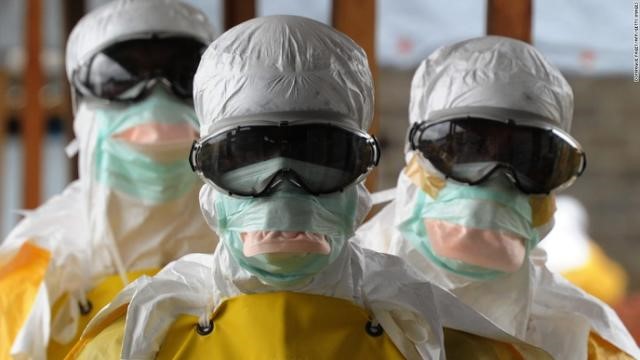
Third were the austerity measures rolled out by the FG, but which many pundits despised as panic-stricken. We, however, strongly believe and proclaim it, that with the trio of the Minister of Finance and Coordinating Minister for the Economy, Mrs. Ngozi Okonjo-Iweala, Petroleum Minister, Mrs. Diezani Allison- Madueke, and the Minister of Industry, Trade and Investment, Mr. Olusegun Aganga, in place, the tsunamic effects of global oil prices’ slump could be very well managed and the adverse seismic effect ameliorated without piling additional pressure on ordinary Nigerians, like another hike in the pump prices of petroleum products as being speculated. If the team remains constructive, professional and polity-friendly in its educative and interventionist aspects of addressing the economic emergency, it is most probable that the nation, just as it did in Ebola conquest, would triumph over the nation’s present economic predicament.
Going down memory lane, Nigeria did apocalyptically worse in the aftermath of the Arab Oil Embargo of 1973 (after the Yom Kippur War); as well as during the 1983 slump that led to the illconceived and executed austerity measures of the then National Party of Nigeria (NPN) government. This was long after the late sage, Chief Obafemi Awolowo, patriotically and analytically warned of dire-straights ahead. The cheerleaders and political jobbers of the time, however, ignored the astute ex-finance minister’s warning, leading to the government’s eventual doom. The current austerity measures introduced by the FG may be tolerated while government monitors and reacts to further developments in the international oil and gas market place. But the FG, and this is most regrettable, has not compelled visible and strong leadership sacrifices at the top.