With recurring fuel crisis in the country, Nigeria aptly fits into the metaphor of that character that resides in a river bank, but baths with spittle. A member of the Organisation of Petroleum Exporting Countries (OPEC), Nigeria, with a huge crude oil production capacity of 2.5 million barrels per day, is ranked as Africa’s largest producer of oil. Globally, the country is among the first 12 largest oil nations. The limit set by OPEC quota is also an advantage that can be exploited to provide surplus crude for local refining. But refining petroleum products in Nigeria has turned a fairy tale; with the doublespeak of the relevant authorities on the true state of the country’s four out-dated refineries; and grim hope for the construction of new ones.
In truth, no year passes by without the country experiencing acute fuel shortage. When it occurred about the second quarter of this year, the story then was that petroleum tanker owners refused to lift products to retail outlets because of fuel marketers’ failure to pay for their past services. Marketers in turn blamed their indebtedness to the transporters on Federal Government’s inability to meet its fuel import subsidy obligations. The pump price of Premium Motor Spirit (PMS), for instance, soared to as high as N350 per litre from N87 per litre, the official rate, while former Minister of Finance and Coordinating Minister for the Economy, Dr. Ngozi Okonjo- Iweala; and marketers indulged in claims and counter-claims over the payment of N159 billion subsidy.
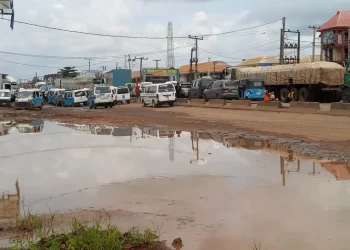
Presently, the country has again been plunged into a similar crisis, with reports indicating the PMS now goes for between N200 and N400 per litre, depending on which part of the country one is. The Nigerian National Petroleum Corporation (NNPC) has been dishing out figures representing millions of litres of PMS trucked out to various parts of the country amidst the crisis, but the scarcity persists. Reports last week said President Muhammadu Buhari sought approval from the National Assembly to pay N413 billion subsidy claims put up by oil marketers, as the N140 billion appropriated for subsidy payment in the 2015 budget was not enough. Hope is thus raised that with the outstanding N413 billion paid, oil marketers would team up with the NNPC to guarantee unhindered supply of petroleum products nationwide.
Similar arguments were accentuated in the past, but they in no way diminished the recurrence of fuel shortages. Worse still, nothing holds any strong promise that President Buhari’s payment of the N413 billion to marketers would arrest the vicious circle made possible by the country’s almost total reliance on the importation of petroleum products to meet local needs; which makes the stranglehold of insatiable oil marketers on the nation’s jugular possible. We do not believe that the recurring mess would be possible if the country had sufficient refining capacity and import sparingly to bridge shortfalls. But getting the nation’s four refineries to work and the building of additional ones appear tasks the FG considers impossible.
Not too long ago, the NNPC said the Port Harcourt and Warri refineries had commenced preliminary production following their rehabilitation; and that it had shifted its attention to the Kaduna Refining and Petrochemicals Company; all with the intention of boosting local refining capacity and products’ supply lines. But shortly after, the Minister of State for Petroleum Resources, then as a newly appointed Group Managing Director of the NNPC, Dr. Ibe Kachikwu, complained that the country was losing N40 billion per annum due to the poor performance of the four refineries. This implied that the so-called rehabilitation was a fluke. It is thus back to square one, in other words, unrestrained petroleum products’ import.
Is it not embarrassing to the government of the day that Nigeria, with its exalted profile in crude oil production, is probably the only major oil producer worldwide with scant refining capacity, in a world where some countries with little or no oil endowment boast of many state-of-the-art refineries? For how long would stories about fuel subsidy, landing cost of imported petroleum products, etc., which end up exaggerating the cost of fuel in the country, end? While we do not support the brash removal of oil subsidy, it is a regime whose purpose has been defeated by the non-availability of the products at subsidised rate. It is a policy the FG should find ways to end. What the country needs is an alternative policy that supports local refining and honest deregulation, while the FG takes charge of strictly strategic national and citizens’ interest in the oil sector.