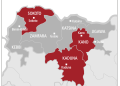
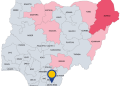
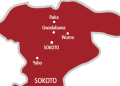
No fewer than 20 persons have reportedly died of cholera in Shira Local Government Area (LGA), Bauchi State, according to an official statement released last weekend by Mallam Danlami Baza, the council information officer. Some 200 persons were also admitted in the hospital. Within the last one month, scores of children have died as a result of the disease in Ebonyi and Plateau States in what seems to be an under-reported national epidemic.
According to the United Nations Children Fund (UNICEF), more than 500 people had died as a result of cholera outbreak in Nigeria in the last five months. “The mortality for cholera in 2015 is over 500 in Nigeria and there are so many deaths still occurring. We need to provide good water to prevent cholera outbreaks and ensure that things we eat especially fruits are properly cleaned before we consume them,” said Mr. Olusoji Adeniyi, Monitoring and Evaluation Officer, UNICEF, in Kano.
Against the background that cholera, which often leads to the infection of the small intestine, is mostly contracted through drinking of contaminated water and eating of waste products, it is a shame that Nigerians are still afflicted by such a disease in this day and age. But with the systemic collapse of critical institutions and basic health facilities in many of the states today, it is little surprise that the country is made to spend more on the treatment of cholera rather than on its prevention.
Indeed, in many of the reported cases, it is evident that some states have abdicated their responsibilities while huge resources that should be deployed for the welfare of the people are now used to service former governors in the name of a corruption-ridden pension and gratuities package. In fact, chances are that the annual security votes for some of these governors surpass budgetary allocations for the provision of clean water for the people.
It is very sad that for more than four decades, cholera has been a recurring disease in Nigeria and has led to the death of thousands of our people, especially children. While there have been some efforts by the federal government to deal with the challenge, we have not seen a corresponding commitment from the state governments yet that is where cholera appears to be ravaging citizens the most. Since the first crisis concerning the spread of the disease begins with failure to provide potable water for their people, most of the governors should be held accountable for the spread of cholera.
The spread of cholera becomes worse when the environment is not clean; when water system is not treated and when sanitation is not taken seriously. The sad part of it is that in many of our states, the villagers and rural dwellers are left to rely on streams as the only source of drinking water and there are no provisions for disposing waste. In most cases also, the people even have to rely on stagnant water for washing their clothes and other items. Therefore, since cholera is more prevalent in rural areas, the problem becomes compounded when and where there are no modern medical facilities to assist in the treatment of the disease.
To the extent that the world has moved ahead of the era where cholera kills citizens, Nigerian leaders at all levels and healthcare officials must sit up to do the needful. The authorities in the states must therefore do more in providing adequate clean water for the citizens, especially for those that are in the rural areas.