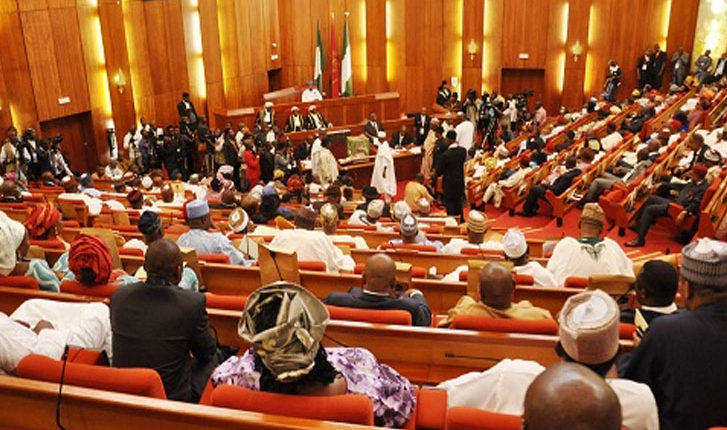
The Senate on Wednesday faulted the call by the organised labour for the introduction of differential wage for political office holders in the country.
The Chairman of the Senate Committee on Media and Public Affairs, Senator Ajibola Basiru, who stated this in an interview with one of our correspondents in Abuja, urged labour unions to stop comparing the minimum wage issue with political office holders’ pay.
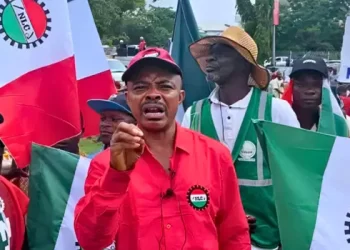
The organised labour, during a meeting with House of Representatives leaders in Abuja on Tuesday, had asked the National Assembly to decentralise wage system of political office holders based on the incomes of their states.
The call was made as part of workers’ opposition to a bill, which seeks to transfer minimum wage negotiations from the exclusive legislative list to the current list.
When it becomes law, the bill, which passed the second reading at the House on February 23, will enable states to negotiate minimum wage and determine what they can pay.
But at the meeting with the House leaders on Tuesday, the National President of the Nigeria Labour Congress, Ayuba Wabba, advised the National Assembly to start restructuring of the wage system with political office holders, whom he said earned humongous salaries.
The Senate spokesman, Basiru, on Wednesday said there could be a national template for a minimum wage but that insisting that all states must pay the same salaries to their workers was unrealistic based on the current economic reality.
On the issue of differential wage for political office holders, Basiru said, “The Nigeria Labour Congress should come up with what is in the best interest of their members and not to make comparison that is not even applicable at all.
“For me, as a federalist, I believe that every state should be able to have its own autonomy to fix the wages of its workers but it does not mean that there should not be a national standard which is represented by the national minimum wage.
“The problem with the national minimum wage is that it is now based on relatively. It is now being used as a benchmark for having a salary table that is almost uniform throughout the country. That is where the problems arose.
“I don’t have a problem with a standard minimum wage so that the vulnerable workers and those at the lower level of the ladder will have something that can take them home and partake meaningfully in society.
“To that extent, I support that there must be a national standard for minimum wage, but to the extent that the salaries of all categories of workers in all states would be uniform because it is being calculated on the table of relativity to form the national uniform wage is not sustainable for now. This is because the states are relying on allocation from the centre.
“Every state is expected to have carrying capacity of its personnel expenses and overhead.
“My advice is that labour should see it from the perspective of having a minimum wage that would ensure that the vulnerable workers are taken care of.
“They must be conscious of the carrying capacity of states to be able to pay, otherwise, it will lead to a situation where many states are not even paying the current level.
“Many states are paying in percentages while many states cannot even remit the contributing pension funds of their workers to the administrators.
“If the Nigerian economy is adversely affected by the drop in the price of crude oil, it will lead to downsizing of workers in some states if the NLC should insist on the payment of a national minimum for federal and state workers.” – Punch.