The recent intervention by the Enugu State Electricity Regulatory Commission to reduce tariffs for consumers has spotlighted systemic challenges and presented a compelling case for fundamental reform across the country’s power sector.
Therefore, the distortions in Nigeria’s electricity market underscore the urgent need for fair and transparent pricing structures. A situation where electricity consumers, held in a captive market, are forced to pay for services not rendered is absurd and alien to a truly functional market economy.
This new approach by the EERC, underpinned by data-driven audits and cost-reflective pricing, exemplifies the change desperately needed nationwide but absent under the current regime dominated by centralised controls and inefficient service delivery.
The stark contrast between Enugu’s tariff of N160 per kWh, down nearly 23 per cent from the federal average of N208 per kWh, exposes how outdated and opaque pricing has burdened Nigerian households and businesses.
Despite escalating tariffs over the years, a reliable power supply remains elusive. This forces many to depend on costly, alternative sources like generators, further straining household budgets and undermining business competitiveness.
The Manufacturers Association of Nigeria cites electricity surpassing 40 per cent of operating costs. This makes reforms more obvious and urgent.
Even the Presidential Villa, faced with escalating electricity bills and an unreliable supply, has opted for a N10 billion solar-powered system, effectively abandoning the grid.
Yet, the Nigerian Electricity Regulatory Commission, which is meant to safeguard consumers and enforce accountability in the sector, has largely failed to compel distribution companies to improve their performance or justify the high costs passed on to consumers.
Compounding this failure is the persistence of pervasive losses. Technical inefficiencies, electricity theft, and inadequate metering result in the loss of nearly 40 per cent of every megawatt generated nationwide.
These losses exacerbate tariff hikes and entrench a vicious cycle where consumers pay more without corresponding improvements in service quality.
With only 45 per cent of consumers metered, the lack of effective metering undermines transparency and consumer confidence, highlighting the necessity for NERC and the DisCos to prioritise widespread, reliable metering technologies to ensure accurate billing and reduce pilferage.
Hiding behind an unjustified, exorbitant, and exploitative service-based Band A tariff and estimated billing structures to cover the gross inefficiencies of the DisCos, caused by a disappointing lack of investments in critical distribution infrastructure (contrary to their licensing terms), proper billing and collection failures, and an apparent lack of managerial competence, cannot be considered fair practice.
That NERC, as regulator, continues to condone these failings under the guise of seeking cost-reflective tariffs to preserve industry viability and attract investors is suggestive of a conspiracy to cover its shortcomings.
It is indeed strange that while Mainpower, the DisCo in Enugu, has not uttered a word in protest over the tariff slash since it was implemented, it is NERC that is kicking, questioning decisions based on its template, and insisting that the state will have to pay a subsidy where none is required.
It is quite revealing that the Enugu regulator’s estimates indicate that actual power generation costs could be as low as N45/kWh on average over the next five years, compared with the N112/kWh benchmark used by NERC. This means that consumers are paying a premium for atrocious services.
This borders on outright fraud, a crime contrary to Nigerian laws.
If Mainpower is satisfied that the tariff review was conducted transparently, taking into account its procurement, operating, and maintenance costs, transformer stocks, and staffing requirements, among others, and still leaves a significant profit margin, what problem is NERC trying to address?
Understandably, other DisCos are jittery that more states will follow suit in a move that threatens to staunch the flow of their unearned profits.
Electricity billing by DisCos increased by 106.68 per cent or N393.26 billion year-on-year to a total of N761.91 billion in the first quarter of 2025, compared with the same period in 2024, per NERC data.
However, only N559.3 billion was collected during the period, translating to a revenue collection efficiency of 73.4 per cent and a shortfall of N202.61 billion or 26.6 per cent, largely due to metering deficit.
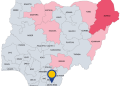
Reports suggest that seven states, including Ondo, Edo, Benue, and Delta, have taken steps to establish independent electricity regulators. Lagos, Ogun, Niger, and Plateau are reportedly preparing similar moves by September.
Against this backdrop, industry experts have advocated the abandonment of the current “one-size-fits-all” tariff approach in favour of a decentralised, multi-tiered tariff structure that reflects the diverse economic realities, infrastructural capacities, and energy goals of individual states.
One compelling blueprint includes options such as a cost-reflective tariff to ensure full cost recovery for DisCos and GenCos; a service-based tariff linking charges with supply quality and hours; and a subsidised lifeline tariff that protects low-income and underserved communities by providing affordable baseline access.
Others include: a renewable-driven local tariff that allows states investing in mini-grid or off-grid renewable solutions to set tariffs based on local supply conditions, and a performance contracting model that links tariffs to performance benchmarks agreed upon by states and service providers.
This model not only aligns with the Electricity Act’s empowerment of states to manage electricity generation, transmission, and distribution within their domains but also promises transparency, fairness, and efficiency by directly connecting tariffs with service levels and local conditions.
The prevailing situation in the power sector, which constitutes a threat to Nigeria’s economic progress, demands a review of the licences of underperforming DisCos, given their recurrent failure to provide reliable power despite charging exorbitantly.
The Enugu experience shows that states exercising regulatory autonomy can demand detailed audits and enforce cost discipline, holding DisCos accountable and protecting consumers from inflated tariffs.
It underscores the unsustainability of the federal subsidy regime, which currently consumes trillions of naira annually without fixing structural inefficiencies.
The Tinubu administration is considering floating a bond to offset the estimated N4 trillion in unpaid subsidy payments to sector operators, which continues to rise even as the country and citizens are compelled to pay for darkness.
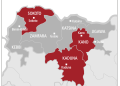
The recent takeover of Abuja and Benin DisCos by banks due to unpaid debts and the fact that Kaduna, Kano, and Ibadan DisCos fell under AMCON management due to similar reasons suggest that the power sector privatisation, at least at the distribution level, has largely failed.
Ibadan DisCo was recently sold for N100 billion ($64.5 million), triggering accusations of undervaluation.
The DisCos require significant investments to replace old and damaged transformers, feeder pillars, poles, lines, and other last-mile infrastructure that hinders a stable power supply to homes and businesses.
The Tinubu administration estimates that the DisCos are undercapitalised by N2 trillion. This is because most of the so-called investors who participated in the rigged privatisation process were fixated on instant revenues, not investments to drive sustainable future profits.
Now that they have unravelled, it is time for a reset by finding technically competent, highly capitalised, business-savvy, and customer-oriented investors that can serve consumers better.
Ultimately, multiple DisCos should be allowed to operate concurrently within zones to foster competition and give consumers a choice of service providers.
Tinubu should deal with the TCN, a huge but weak link, that cannot wheel more than 5,000MW of the total installed capacity of 13,625MW, a disgraceful statistic for a country of 230 million inhabitants spread over 923,768 square kilometres.
Until the national electricity framework supports fair tariffs and dependable service, millions of Nigerians will remain trapped in this costly disequilibrium, inhibiting economic growth and perpetuating energy poverty.
Nigeria’s electricity market demands a paradigm shift towards fair, transparent, and decentralised pricing that recognises the country’s economic heterogeneity and fosters competitive service delivery.