After years of turning a blind eye to their sanguinary activities, the global Islamic community is now belatedly seeing the wisdom in pooling their resources to be able to give terrorist organisations, wherever they may exist, a “coordinated fight.” Recently, a coalition of 34 Islamic nations was born in Saudi Arabia with the specific mandate to defeat terrorism, which the Saudi foreign minister, Adel al-Jubeir, described as a disease.
Drawing its membership from countries with strong Islamic background across Asia and Africa, the coalition has a mandate to do everything within its power, including the deployment of troops, to fight terrorism. Jubeir, who acknowledged the fact that nothing would be off the table, said, “It is time that the Islamic world take a stand, and they have done that by creating a coalition to push back and confront the terrorists and those who promote their violent ideologies.” But laudable as this development may seem, it is actually an initiative that is long overdue.
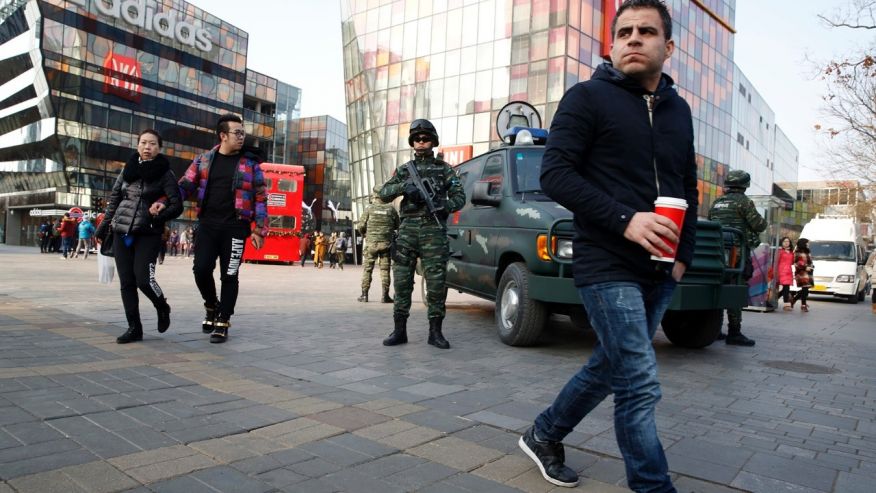
Global peace and security have been rudely and routinely compromised over the years by the activities of terrorist organisations that exercise their influence even in places hitherto thought to be beyond their reach. They have been a source of pain to families and communities, at times throwing whole countries into mourning, because of their seemingly inexhaustible capacity to unleash destruction of lives and property. Among some of the most well-known terror groups are the Islamic State of Iraq and Syria, Boko Haram, al-Qaeda, which has franchises all over the Middle East and North Africa, Taliban and al-Shabaab.
Last year alone, according to the 2015 Global Terrorism Index, deaths caused by terrorism increased by 80 per cent, while the cost to the global economy stood at $52.9 billion. The Institute for Economics and Peace, which issues the index, said 32,658 people were killed by terrorists last year, compared to the 18,111 in the preceding year. Of this figure, Boko Haram, which has been terrorising Nigeria and some of her north-eastern neighbours, and ISIS, which has seized swathes of territory in Iraq and Syria, have been responsible for 51 per cent of the deaths. In fact, IEP identified Boko Haram as the most deadly terrorist organisation in the world last year, after killing 7,512 people.
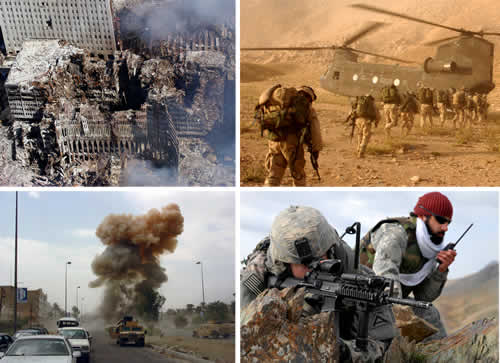
Although terrorist attacks have occurred with more frequency and devastation in Islamic nations and countries with very high population of Muslims, the global fight against terror has been left mostly in the hands of the West. At the time Osama bin Laden went into hiding in the mountains of Afghanistan and Pakistan, it took troops from the United States, Britain and other Western nations to smoke him out and kill him. The current fight against ISIS, even though taking place in the heart of the Middle East, is spearheaded by a coalition of Western forces led by the US, which has been carrying out aerial bombardments but has refused to put its soldiers on the ground.
When the Syrian crisis started as an offshoot of the Arab Spring of 2011, the devastation that has so far taken place in the civil war would have been averted if its Middle Eastern neighbours had stepped in. That conflict, according to Al-Jazeera, had claimed almost a quarter of a million lives by August this year, including 12,000 children. Even in matters concerning the massive movement of people running away from the war, the relatively wealthy and comfortable Arab countries have been unconcerned as many refugees die in the perilous journey through snowy land and tempestuous sea to Europe. Even if they do not have to join in the fray, they should at least be able to accommodate a large number of those fleeing the war, especially given the reluctance to accept them in some of their countries of destination.
This is why the coalition is seen as belated, but still relevant. If the new coalition had been on the ground before now, a lot would have been achieved in the bid to curb the seemingly unbridled spread of terrorism across the world. It should be noted that in West Africa, where the Economic Community of West African States Monitoring Group was established in 1990, it has helped in bringing about stability. At the time when the West was watching while lives were being destroyed in Sierra Leone and Liberia, it was ECOMOG, led by Nigeria that came to the rescue. Since then, rascals in army uniform have been very careful about embarking on coups, since they know that their actions will not be without a consequence.
But beyond just forming a coalition, some of these countries that are believed to be sponsors of terrorism themselves have to have a change of heart. Some of them are known to sponsor the hate ideologies that eventually give birth to terrorism abroad, while they maintain a position of strict abhorrence in their own countries. No matter what declaration is made, only a firm commitment and sincerity of purpose will help to stem the tide of jihadist terrorism, even if it is difficult to completely defeat it.