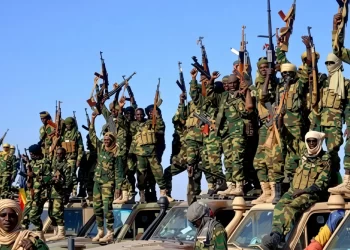
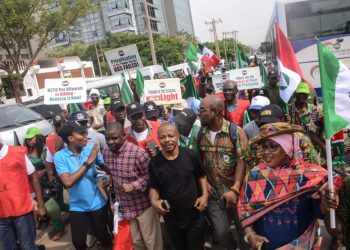
In a country that is attracting guarded global applause for slowly turning around its much vilified electoral system, the pervasive violence that plagued last weekend’s governorship and state Houses of Assembly polls has once again blighted the little progress we have made in our electoral system. Apart from ballot box snatching, forcible hijacking/destruction of electoral materials, intimidation of election officials and rigging, many people were brutally killed. In an era where many countries are conducting peaceful elections, this is primitive and should not go unpunished.
To confirm the high level of violence, the Independent National Electoral Commission, which administers the polls, said it would investigate 66 violent incidents in 19 states in relation to the elections. Lamenting the upsurge in violence compared to the March 28 presidential and National Assembly polls, INEC said, “These were in Rivers (16 incidents), Ondo (eight), Cross River and Ebonyi (six each), Akwa Ibom (five), Bayelsa (four), Lagos and Kaduna (three each), Jigawa, Enugu, Ekiti and Osun (two each), and Katsina, Plateau, Kogi, Abia, Imo, Kano and Ogun (one each).”
Indeed, there are several gory instances of the needless loss of lives. In the Buguma, Asari-Toru Local Government Area of Rivers State, five people were shot dead early on election day when hoodlums invaded the distribution centre. In all, seven people died in the Rivers mayhem. In the Ojota/Ogudu area of Lagos mainland, thugs went on the rampage shortly after the declaration of the governorship election result on Sunday. Three people were certified dead. Similarly, three people were shot dead in Ile-Ife, Osun State during fighting between the supporters of the Peoples Democratic Party and the All Progressives Congress. Two of the deceased were said to be siblings.
Akwa Ibom was not different. Five people were killed there. Victor Attah, a former governor of the state, said, “The shooting and attacks were so widespread. (They) were carting away election materials, including card readers.” This is ominous. Likewise, soldiers shot dead four people in a voting queue in Suru LGA in Kebbi State after being invited by a councillor who was alleged to be uncomfortable with the way the poll was going. In Ilaje, Ondo State, three people reportedly died as thugs instigated mayhem during the assembly poll.
In Taraba State, North-East Nigeria, violence occurred after INEC declared the governorship election inconclusive. As a result, the houses of the Secretary to the State Government, Timothy Kataps, his predecessor, Emmanuel Njiwa and a state lawmaker, Abel Dia, in the Mambilla Plateau, were burnt down. The INEC office in the Gembu area of Taraba was also burnt down by protesting youths. In Kano State, the police arrested 19 people, including a party ward chairman, for ballot box snatching. “With their weapons, they attacked, seized about 4015 ballot papers and other sensitive materials, tore them and set them ablaze,” Magaji Musa, the Kano State Police Command spokesman, said. Earlier, Suleiman Abba, the Inspector-General of Police, had said 124 suspects were arrested for various forms of violence during the March 28 presidential poll.
However, it is surprising that hoodlums are still able to beat the heavy security presence on Election Day to perpetrate violence. Not only was movement restricted countrywide between 8am and 5pm on Election Day, for instance, 17,000 policemen were deployed for election duties in Rivers, 21,000 in Oyo and 15,000 in Kaduna State. All the other states also had heavy police presence, apart from the military and other security agents.
What to do? To put a permanent stop to the violence, those found culpable after the probe should be tried and punished in accordance with the laws of the country. The new government must ensure the diligent investigation and prosecution of those that have been arrested. Violence compromises the integrity of an election. Since independence in 1960, our elections have been tainted by violence: widespread uprising – Operation We Tie – in the Western Region between 1963 and 1965 eventually led to the first military coup of January 15, 1966. In 1983, many states went up in flames after the rampant rigging masterminded by the ruling party, the National Party of Nigeria. This also led to the December 31 military take-over.
Four years ago, the post-election violence claimed 800 lives, mainly in the North, according to organisations like the Human Rights Watch, the International Crisis Group and CLEEN Foundation. Last Saturday, many Nigerians opted to stay back at home and not vote because they envisaged the charged atmosphere before D-Day would bring serious violence. Yet, it is hard to remember the number of those who have been brought to book since 1963.
One of the immediate tasks before Buhari is to fulfil his promise of last weekend that his administration would investigate and prosecute all the suspects that have been arrested since March 28. Interestingly, in his reaction to the violence in states like Rivers, Akwa Ibom and Lagos, Buhari had said, “People must not benefit from being lawless. You can’t be in a position by virtue of the Constitution, subvert the Constitution and continue to enjoy the privileges offered by the Constitution.” He is right.
INEC’s proposal for the creation of an Electoral Offences Commission with authority to investigate and prosecute breaches of relevant electoral provisions is worth considering now.