A suit was on Wednesday filed before a Federal High Court in Abuja seeking an order stopping any attempt to further shift the general elections which were recently re-scheduled to take place on March 28 and April 11.
The suit numbered, FHC/ABJ/CS/106/2015, was instituted by the Hope Democratic Party, asking for an order barring undue interference with the power of the Independent National Electoral Commission to schedule and conduct elections in the country.
It asked the court to stop what it described as “the usurpation of powers of INEC” under any guise.
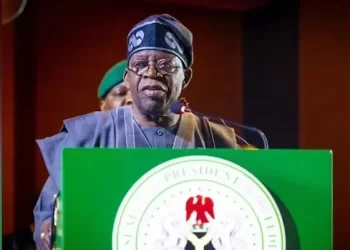
The defendants in the suit include President Goodluck Jonathan, the National Security Adviser, Sambo Dansuki, and the Chief of Defence Staff, Alex Badeh.
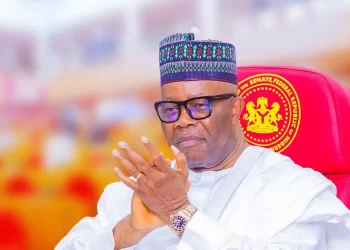
Other defendants are the Attorney General of the Federation and Minister of Justice, Mr. Mohammed Adoke, and the Independent National Electoral Commission.
The plaintiff, asked the court to declare that the postponement of the polls earlier scheduled for February 14 and 28 was not in conformity with the provisions of the law.
It hinged the prayer on the provisions of section 132(1) of the 1999 Constitution and section 26(1), (2) and (5) of the Electoral Act, which it said prescribed that an already scheduled polls could only be shifted if there was natural disaster or natural emergency.
It contended that the letter by the Chief of Defence Staff and the National Security Adviser dated February 3 to INEC on their inability to guarantee security for Nigerians did not qualify as a natural disaster or emergency that could warrant election postponement.
Part of the plaintiff’s prayers read, “An order restraining the 1st (CDS), 2nd (NSA), 3rd (Jonathan) and 5th (AGF) from further interfering in the plaintiff’s right to participate in election and governance of Nigeria and the power of the 4th defendant (INEC) to schedule and conduct elections in Nigeria.
“An order compelling the 4th defendant (AGF) to direct the due provisions of adequate securities by the civil authorities and other civil defence agencies with responsibilities of providing internal securities for the conduct of election by the 4th defendant (INEC).”
The plaintiff also contended that INEC was “not under any duty or bound to obey or comply with any unverified or cogent reasons to postpone scheduled election in the absence of a natural disaster.”
It also contended that INEC was required only to stick strictly to the constitutional and electoral laws to avoid intended obvious mischief and truncation of the nascent democracy.
It also urged the court to hold that INEC as an electoral umpire was “at liberty to device, arrange, and procure any security arrangement or regional co-operation from within or outside the country to ensure a hitch-free election at scheduled general elections.”
In an 18-paragraph supporting affidavit deposed to by Mr. Anderson Chike, the plaintiff averred that the grounds of postponing the February 14 elections by INEC “were not cogent and verifiable reasons as required by law which stipulates only natural disaster and natural emergencies.”
It also averred that the internal security including that of election duties were undertaken by the police and other civil authorities and not the military whose roles in elections were limited and complimentary in the event of major internal crisis.
The affidavit further claimed that the involvement of the Chief of Defence Staff and NSA in purely civil duties is wrong and reasons so adduced only exposes INEC to future vulnerability of mis-chief and abuse of military powers in favour of themselves and their benefactors.
The party urged the court that in deciding the suit it should give due and constructive interpretation of the sections of the relevant statutes and law to restore plaintiff and Nigeria Citizens’ trust in the conduct of future elections in Nigeria.
It urged the court “to curb undue interference (which are) to the detriment of the plaintiff in the sponsor of its candidates and its projected time and expenses at elections when scheduled as provided by law.”
It also contended that “unless defendants are reprimanded and restrained from further violation and whimsical application of the laws and interference thereof, their actions may inadvertently lead to unimaginable crisis in the polity and the country at large especially where foreign observers and citizens have adjusted and prepared for the elections as scheduled.”
The case has not been assigned to a judge. – Punch.