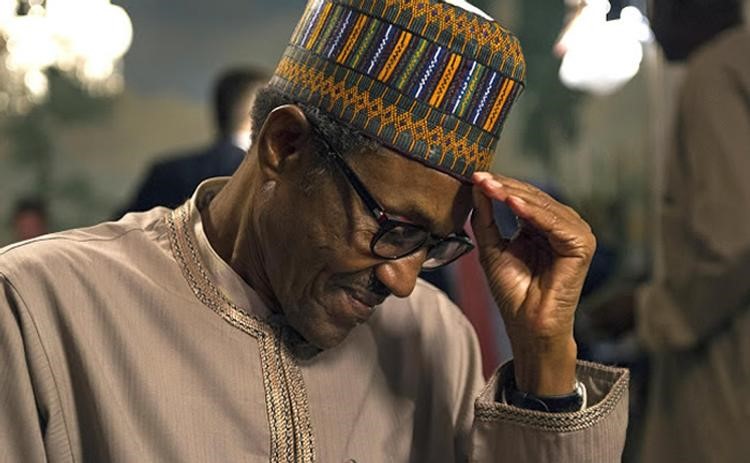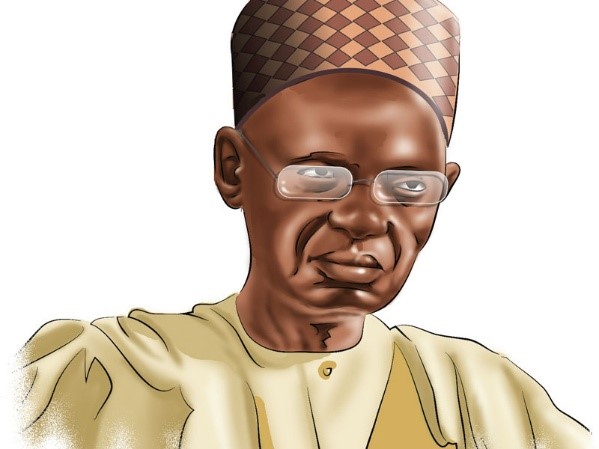
Shehu Shagari, former President of Nigeria, dies at age 93
The death, on Friday at age 93, of Second Republic President, Alhaji Shehu Usman Aliyu Shagari has robbed our country of a patriot who was both an elder and a statesman. Throughout his life, Shagari maintained a simple, sincere, humane and realistic stance in his approach to national issues. In and out of the various offices he held at different times, before and after independence, the former teacher and bureaucrat remained untainted by the greed that was common among his peers.
As president between 1979 and 1983, Shagari enthroned the kind of bi-partisanship that is in short supply today and gave everybody their dues. Besides, no one could accuse him of promoting one ethnic/religious group over another. He saw the whole country as his constituency.
For sure, there will always be a debate about Shagari’s stewardship in the Second Republic which was terminated by a military coup in December 1983. But it is to Shagari’s credit that the Justice Samson Uwaifo Panel that examined the misdeeds of the era absolved him and his deputy, the late Vice President Alex Ekwueme on the charge of corruption even though the military regime said both must be held vicariously responsible for the economic mismanagement and excesses of their appointed officers.
Otherwise a noble personality, Shagari’s greatest flaw as president was his weak and vulnerable disposition. For a country as complex and raucous as Nigeria, his temperament and recessive character arguably made him a mismatch for the extra rigour and assertiveness specifically required for political leadership within our unique sociopolitical context. Since nature tends to avoid a vacuum, it was logical that some lieutenants of overbearing disposition would help fill the gap-to negative consequences of his administration and Nigeria.
Whatever may have been his failings as a leader, Shagari will be remembered as a president who upheld the rule of law and respected the principle of separation of powers. He will also be remembered as a president who was blind to ethnicity and religion in making critical appointments. This much was attested to by a former Naval Chief, Vice Admiral Akin Aduwo who once reminded Nigerians of what obtained during the Second Republic.
Aduwo wrote: “President Shehu Shagari of the NPN, a northern Muslim, had set an amazing example of great nationalist statesmanship in the appointment of service chiefs in April 1980 as follows: Chief of Defence Staff, Lt. General Alani Akinrinade, a Christian from the then UPN ruled Oyo State; Chief of Army Staff, Lt. General G.S. Jallo, a Christian from the then GNPP- ruled Gongola State; Chief of Naval Staff, Vice Admiral Akin Aduwo, a Christian from the then UPN-ruled Ondo State; Chief of Air Staff, AVM Abdul Bello, a Christian from the then GNPP-ruled Gongola State and Inspector-General of the Police, Chief Sunday Adewusi, a Christian from the then UPN-ruled Oyo State. All those senior officers were Christians and none came from President Shagari’s NPN controlled state, and three out of the five of us are of Yoruba origin!”
Born in February 1925 in a village founded and named after his great-grandfather in Sokoto State, Shagari started his education in a Quranic school before attending Yabo Elementary School. He would later attended Sokoto Middle School, Kaduna College and the Teachers Training College, in Zaria, Kaduna State. Shagari’s career in politics started in 1951, when he became the secretary of the Northern People’s Congress (NPC) in Sokoto, a position he held until 1956. In 1954, he was elected as a member of the Federal House of Representatives for Sokoto West. In 1958, Shagari was appointed as parliamentary secretary to Prime Minister SirAbubakar Tafawa Balewa and that year he also served as the Federal Minister of Commerce and Industries.
From 1959 until the first military coup in January 1966, Shagari held various cabinet portfolios, including Economic Development, Pensions, Internal Affairs and Works. Between 1967 and 1970, he worked in the Sokoto State public service. Following the end of the civil war in 1970, Shagari was appointed by then military head of state, General Yakubu Gowon as the Federal Commissioner for Economic Development, Rehabilitation and Reconstruction, a position he held for one year before being reassigned to man the finance portfolio.
As a founding member of the NPN in 1978, he was bidding to become a senator when the party nominated him as the presidential candidate and he went on to win the election. But from the perspective of the management of the political development of Nigeria, the rise and fall of his presidency has taught the nation a lesson on the need to allow civilian constitutional rule to self-correct as military rule offers no positive solutions.
Quote
From the perspective of the management of the political development of Nigeria, the rise and fall of Shagari’s presidency has taught the nation a lesson on the need to allow civilian constitutional rule to self-correct as military rule offers no positive solutions.