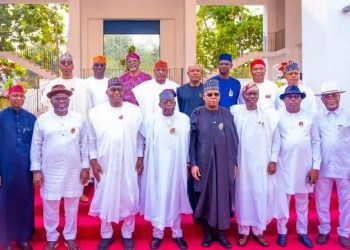
The Federal Government, at the end of a two-day retreat by the National Economic Council (NEC) in Abuja, chaired by Vice President Yemi Osinbajo, declared that it would inject N350 billion into the nation’s economy in the next quarter of the year to stimulate economic activities and create jobs. The Minister of Finance, Mrs. Kemi Adeosun, said the government was“… specifically looking at contractors who have laid-off staff”, and how many Nigerians the N350 billion would assist to put back to work. A number of resolutions were listed for action by the NEC at the said retreat, which if vigorously implemented, could help in bailing out the FG and states from their economic predicaments; and possibly lessen the grinding economic quagmire Nigerians are currently contending with.
The retreat resolved, for example, that the federal and state governments will make concerted and consistent efforts to diversify revenue sources and focus on fiscal responsibility as a critical element in macroeconomic balance; while the FG in particular will maintain a 30 percent capital expenditure vote in the national budget. National targets for self-sufficiency, subject to proper monitoring, were also set for such staple food crops like rice – 2018; and wheat – 2019. The target for self-sufficiency in tomato paste production is 2016. In addition, states are to set up on-stop-shops, where they currently do not exist, to attract investments; state ministries of education will collaborate with state Universal Basic Education Boards to actualize the Teacher Corp programme; the FG will provide logistics support on the proposed upgrade of 75 existing National Directorate of Employment facilities to Empowerment Centres; while a single register as platform for targeting the authentic poorest and vulnerable for safety net programmes will be institutionalized.
State governments were also asked to identify at least two crops in which they have comparative advantage; and initiate/implement deliberate policies to create access to funds for Micro, Small and Medium Scale Enterprises. Government’s concentration on ‘contractors who have laid-off staff’ when it announced the N350 billion lifeline is by no means strange, following government’s suspension of many ongoing infrastructural projects for reasons not unconnected with budget approval by the National Assembly, falling oil prices/the country’s economic misfortune and the need to re-evaluate or prioritise projects, et cetera.
But should we put aside the misfortune of monumental corruption that dogged the country for decades, for the simple reason that the President Muhammadu Buhari government is now doing something tangible to tame it; as well as the outstanding number of unpatriotic, non-committed, callous and selfish public officials that do not care to extend service that match value-for-money to citizens, the major reasons Nigerians are today grinding in economic penury include the country’s reliance on oil as a major foreign exchange earner, without using the gains of oil when the price was high to diversify the economy, let alone saving for the rainy day. Besides, the country is generally export dependent, to the point that toothpicks were proudly brought into the country by merchants.
You pay for imports with hard currency. And because of the nation’s craze for imports, the government and its monetary authorities are under persistent pressure to have enough dollars in stock, a development made possible, not by exports emanating from the Nigerian soil, but by petro-dollars earned from oil. Is it then a surprise that with plummeting oil prices, the cost of dollar is skyrocketing, while that of naira is falling? Had the Nigerian economy been diversified for long, the nation would have parried the shock of global fall in oil prices and Nigerians will carry on with their lives with minimal economic pain. But the contrary is presently the case.
Added to the economic burden are infrastructure deficits in critical sectors like electricity, roads, rail, the downstream oil sector and even water, among others, a situation that cumulatively translate to difficulties and high costs in virtually all fields of endeavour. The NEC retreat, we must say, produced nothing but a wish list that demands steely political will, sincerity, determination and commitment particularly by the political and bureaucratic elite to be made reality. Not leaders and public servants that will revert to profligacy and reveling when oil prices rebound for the better. As we speak, government’s forex restriction policies, import ban and eroded value of the naira are taking their toll on the living condition of Nigerians. Hospitable policies and infrastructure that can help diversify the economy through agriculture, manufacturing and technology, et cetera, are what the country urgently needs