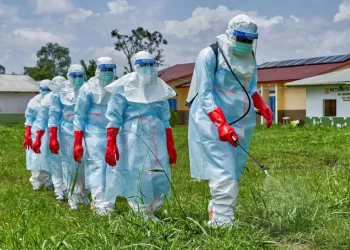
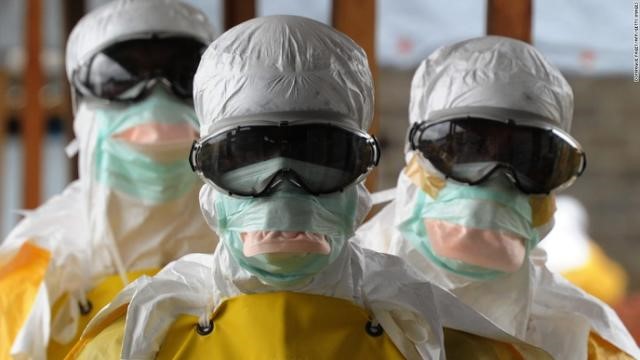
The United Nations is to fly in food aid for up to a million people affected by the Ebola outbreak in West Africa.
According to the World Food Programme, an arm of the UN, the agency is bringing in its own aircraft to make sure food gets through to quarantined areas in Guinea, Liberia and Sierra Leone.
The organisation said it would come to the aid of these worst Ebola-hit countries due to the problem of food crisis there.
The WFP Spokesperson, Fabienne Pompey, said, “The restrictions on movement in the most affected areas threatens food security. Commerce is affected; people cannot get to their fields; and prices rise at the markets; so the poorest have trouble feeding themselves.”
As a result of the Ebola outbreak, the WFP said it had already started feeding several thousand people in the worst affected areas, including the families of victims who have been quarantined, orphans, old people and hunters hit by the ban on the sale of bush meat.
With several commercial carriers suspending flights to the region because of the epidemic, she said the agency would start a new humanitarian service on Saturday (today) with an aircraft based in Conakry, Guinea which would link the capitals of the three countries.
She said two helicopters would also be brought in to deliver aid to the most isolated areas.
Meanwhile, a humanitarian-aid non-governmental organisation, Medecins Sans Frontieres, also known as Doctors Without Borders, said on Friday that the outbreak of Ebola in West Africa may take at least six months to be brought under control.
Speaking in Geneva, Switzerland, MSF President, Joanne Liu, said the situation was “deteriorating faster, and moving faster, than we can respond to.”
Earlier during the week, the World Health Organisation had said the scale of the outbreak appeared to be “vastly underestimated.”
It said that “extraordinary measures” were needed.
The epidemic began in Guinea in February and has since spread to Liberia, Sierra Leone and Nigeria.
On Friday, the death toll rose to 1,145 after WHO said 76 new deaths had been reported in the two days to August 13. There have been 2,127 cases reported.
Liu said that although Guinea was the initial epicentre, the pace there had slowed, and other countries – particularly Liberia – were now the focus.
She added, “If we don’t stabilise Liberia, we will never stabilise the region. In terms of timeline, we’re not talking in terms of weeks; we’re talking in terms of months. We need a commitment for months, at least I would say six months, and I’m being, I would say, very optimistic.”
Liu also called for more actions from the international community and stronger leadership from WHO – the UN’s health agency.
She said, “All governments must act. It must be done now if we want to contain this epidemic.
“WHO needs to take leadership and bring some strong elements into the field at all operational levels. It’s already started but it needs to happen at all levels.” Agency report