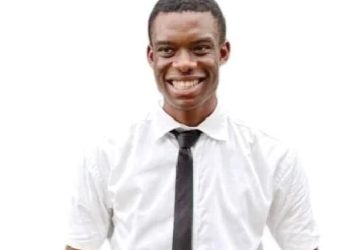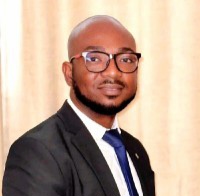
Nnamdi Moeteke is a Clinical Assistant Professor of Community and Public Health and Interim Director of Undergraduate Public Health Programmes at the Idaho State University in the United States of America.
He speaks about his career and other issues.
Excerpts:
You began your career as a medical doctor in Nigeria. What drew you to medicine in the first place, and what was that early journey like for you as a young doctor fresh out of the University of Nigeria?
When I was eight years old, I wanted to become a lawyer because of a TV series I used to watch at that time. I cannot recall the programme’s name, but the main character was a brilliant investigative lawyer who did a great job of solving mysteries and helping innocent people get acquitted. So, I wanted to be like him. However, during my first few years in secondary school, I realised that I had a much greater aptitude for science subjects. I was better at Biology than Further Mathematics, so I opted for Medicine, and it was afterwards that I understood the depth of what I had signed up for.
So, rather than having a prior purpose, I would say studying medicine in the atmosphere provided by the University of Nigeria helped me discover the meaning of life and find my purpose. I left medical school with a profound awareness of a calling to impact lives beyond dealing with individual patients in a clinic. I was excited to be posted to a rural area— Isin LGA of Kwara State— to work as a medical officer for my National Youth Service Corps scheme, and began thinking of ways to leave a positive mark on the area. I planned and implemented health and other development projects and got a state award.
Your career has spanned clinical practice, community medicine, global health research, and now academia. What personal or professional turning point inspired your transition from the hospital ward to the classroom?
I was drawn to public health early in my medical training. After my internship, national youth service, and a brief stint in private practice, I went for a residency in community medicine. In addition to specialised in-training practice, residency also prepares one for academia. Most programmes are in teaching hospitals where residents work under hospital consultants who double as university faculty members. Part of the responsibilities of resident doctors is supporting their consultants in training medical students. As a resident in the Department of Community Medicine at the Delta State University Teaching Hospital, my trainers helped me discover my flair for transferring knowledge and skills, and I started to play an important role in the department, teaching public health and community medicine to medical students of the Delta State University.
By the time I became a senior resident, I was teaching junior residents. During that time, I also executed a project that included training primary care doctors in Delta State in tobacco cessation interventions and treatment of tobacco dependence, while facilitating the adoption of treatment protocols in health facilities. When I got the opportunity to work as a faculty member at Idaho State University and coordinate a project to build the capacity of Idaho’s workforce to respond to infectious diseases, it was not at odds with my interests, and what I was already doing.
Take us through your journey of becoming a Clinical Assistant Professor and Interim Director at Idaho State University, and what does a typical day in your role look like?
When I decided to move to the US, I started searching for vacancies on social media platforms, such as Indeed and LinkedIn. One of them was quite striking, and I remember telling the hiring team at Idaho State University how I was a good fit for the job during the interview. The position was for a Visiting Assistant Professor. The primary responsibility was to oversee the Idaho Collaborative for Infectious Disease Prevention— a subcontracted project funded by the CDC through the Idaho Department of Health and Welfare— in developing and implementing an interdisciplinary curriculum geared toward building the capacity of Idaho’s workforce to respond to infectious diseases, especially in underserved communities. It was supposed to be for one year, with the possibility of an extension for another year. Against all odds, I got the job and moved to the US in January 2023.
I coordinated infectious diseases curriculum mapping across colleges at ISU, and the development of 10 online modules currently used by students and practitioners across the state. I helped to build strong collaborative relationships with internal and external partners at ISU, IDHW, the seven public health districts in the state, and healthcare organisations. I was a little involved in teaching and academic advising in the MPH programme and co-supervised an MPH thesis. Before the second year ran out, I was offered the position of Clinical Assistant Professor and Interim Director of the undergraduate programmes, to be added to my role as Project Coordinator of ICIDP.
Depending on my schedule for the day, my time is spent on communications, carrying out my academic advising and teaching responsibilities (including preparing the lectures and grading student assignments).
You are a co-founder of Medix Frontiers, a non-profit promoting public health. What inspired this initiative, and what impact has it had since its formation in 2005?
Two bosom friends— Dr Charles Chima and Dr Sebastian Ilomuanya— and I founded it toward the end of our third year in medical school, as a health promotion non-profit organisation engaged in working with youths and providing free health services in rural communities in Enugu State. It was the result of a combination of youthful passion and a sincere zeal for service. My co-founders and I were conscious that, as future doctors, we had a special set of skills that we could use to enhance the quality of life of our fellow citizens.
We were convinced that this privilege cames with a responsibility to society that did not have to wait till we graduated, and recognised that similar aspirations were held by many of our peers but could not bloom due to the lack of a suitable platform. We felt a pressing need to birth an organisation that could steer those youthful energies towards improving public health through volunteer work. We wanted an organisation that would address local health needs, especially among the youth and vulnerable populations, by challenging conventional approaches and adopting evidence-based, youth-friendly, efficient methods.
At the outset, we were concerned about the escalating crisis of the HIV pandemic and its implications for future generations in sub-Saharan Africa. So, among other goals, fighting the spread of HIV, which was a bigger public health threat at the time, was a focal point of our efforts. Over the years, the organisation has built a strong community of more than 800 volunteers from more than 20 classes of the University of Nigeria College of Medicine who share our vision of service to society and have received training to improve their capacity to make meaningful contributions to society as doctors. With outreach to rural communities, secondary schools, and university campuses every year, the organisation has provided free medical services and health education to tens of thousands of individuals in Enugu State.
You have been part of important public health activities in Nigeria, including responding to the COVID-19 pandemic and Ebola. What were the most challenging moments in those roles, and how did they shape your current outlook on health systems?
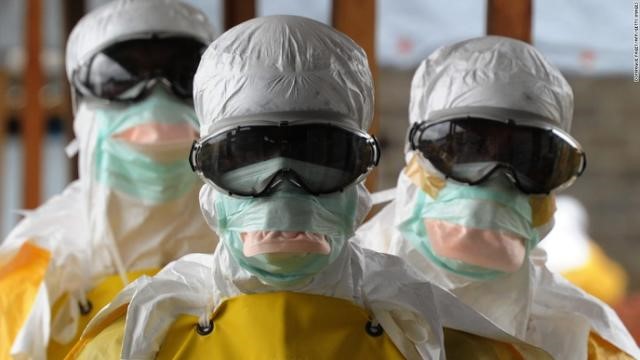
Like every public health emergency, the Ebola epidemic and COVID-19 pandemic were stress tests for leadership, coordination, and the capacity of a system to respond under pressure. One of the earliest and most defining challenges was confronting resource scarcity. From personal protective equipment to testing infrastructure and trained personnel, there was often a need to make high-stakes decisions with limited tools. These logistical constraints, which affected how quickly a patient could be isolated or a health worker on the front line could be protected, had far-reaching consequences. Equally challenging was the battle against misinformation and distrust. One of the takeaways from those times was that effective public health is not just about science but also about establishing resilient systems and infrastructure, as well as building public trust.
The tendency for bureaucracy to slow the momentum of public health response emphasised the importance of building structures that can outlast emergencies. Perhaps most significantly, I saw the emotional toll on our health workforce. My involvement in responding to the pandemic helped me understand better that leading teams through fear, fatigue, and grief called for a leadership style rooted in compassion, transparency, and an unwavering commitment to their well-being.
Many consider a career in Nigeria’s healthcare system to be quite demanding. What made you stay for over a decade, and what eventually pushed you to move abroad?
With all its challenges and downsides, I have always wanted to give back to the Nigerian system, which made me who I am today. With all I have been blessed with, I feel obliged to contribute towards improving the system. However, one gets to a point where the system limits further growth. I also realised that to be a force for the scale of change in Nigeria that I dreamt of, I needed some form of exposure and capacity at a level that being in Nigeria would not afford. I am grateful for the years of first-hand experience with the health system challenges, which is a vital part of the toolkit for any leader who hopes to make a difference.
You earned a Commonwealth Master’s Scholarship to study Public Health at the University of Liverpool. Can you walk us through how that opportunity came about and what it meant to you at that point in your career?
Having realised my passion for public health, by the time I was leaving medical school, I wanted an international degree that would build my capacity to be a global expert in the field. Of course, neither I nor my parents could afford it. For many years, I was admitted to schools in the United Kingdom, but could not secure funding. Then one day, someone shared the link to the Commonwealth Scholarship application in the WhatsApp group of my class in medical school. I quickly opened it and researched more about it. I learnt that Commonwealth scholarships are awarded to talented individuals with the potential to make a positive impact on the global stage.
The selection criteria include academic merit and potential impact on the development of the applicant’s country. I was not too confident, but I believed that the work I had done from medical school through national youth service and residency gave me a chance of winning it. The day I received the award email remains one of my happiest. I firmly believe in divine intervention, but at the same time, as the Roman philosopher Seneca noted, “Luck is what happens when preparation meets opportunity,” and as Louis Pasteur said, “Chance only favours the mind which is prepared.” The award reinforced my belief that prayer and preparation go hand-in-hand in the journey to success.
What was your time as a Visiting Scholar at Harvard Medical School like and what lessons did you carry with you from that experience?
The visiting scholar programme supports scholars pursuing research on inspiring and training future leaders to promote universal health coverage and primary healthcare, training the future primary healthcare workforce, and/or scaling innovative modes of primary healthcare delivery. I was thrilled about the international recognition of my expertise and passion for primary healthcare and community health. It was a reminder that we can all achieve great things and gain global attention wherever we find ourselves.
The purpose of the appointment was to conduct research, promote and advance my work, and engage with the Harvard Medical School community through mentorship of students and trainees, sharing my expertise and knowledge, and exploring opportunities for collaboration with the HMS faculty. It was an incredibly enriching experience, both academically and personally. It was a humbling yet inspiring journey to interact with global experts in the field and to witness the dedication to research, innovation, and advancement of primary care at such a high level. I was motivated to continue making an impact in the field.
What were the most significant challenges you faced moving from Nigeria to the United States?
One of the biggest challenges for me was the winter weather. Arriving from Nigeria’s tropical climate required a great deal of adaptation to survive the frigidity of Idaho, one of the snowiest and coldest states in the US. The temperature dropped to as low as -22°C in my first few weeks there. It was important to learn how to constantly dress in multiple layers of thick clothing, plan activities around the weather, drive in snow, and push myself to stay motivated and healthy during winter. I have had to adjust to the differences in communication styles, too. Though we speak the same language, there are differences in expressions, expectations, or tone that could make one misunderstood. Of course, my Nigerian accent was sometimes a barrier, and there were occasions when I had to say something a second time for the listener to understand me.
You have earned many recognitions, from national and international scholarships to the recent National Institute of Professional Engineers and Scientists Award. Which award has meant the most to you and why?
As with the different projects I have executed, each award I have received has held a special meaning at various points in my journey, and every single one of them has helped me move forward. However, the Commonwealth Scholarship Award in 2017 and the 2025 NIPES Award are noteworthy. Commonwealth Scholarships are traditionally awarded to talented individuals with the potential to make a positive impact on the global stage. The NIPES Young Scientist award category acknowledges an emerging scientist whose work has had a measurable impact on their field. It was not just about the recognition, but when they came.
The master’s scholarship to study at the University of Liverpool came after seven years of continuous admission to universities in the United Kingdom and not being able to secure the needed funding every year. I received the NIPES award after one of the most intense periods of my career, moving to a foreign country to coordinate an important public health effort. These awards felt like an affirmation of technical competence, resilience, and the ability to navigate uncertainty.
Your journey reflects a deep commitment to underserved populations. What does health equity mean to you?
Health equity is the state in which everyone has a fair and just opportunity to attain the highest level of health. The enjoyment of the highest attainable standard of health is one of the fundamental rights of every human being. This idea was first articulated in the 1946 constitution of the World Health Organisation and reinforced in the 1948 Universal Declaration of Human Rights of the United Nations and many other treaties over the years. For me, it is heartbreaking that, after many decades of this recognition of the right to health, a large proportion of Nigerians and many of the world’s populations do not have access to even the minimum standards for health. I have always acted in support of universal health coverage—the idea that everyone, everywhere, should have access to quality, affordable health care.
As someone who has worked in both Nigeria and the US, what would you say is the biggest difference in how public health is taught, practised, or prioritised in both places?
The biggest difference between public health in Nigeria and the US lies in the structure and resourcing of the systems. In the US, public health tends to be more data-driven and preventive, with substantial investments in infrastructure, surveillance systems, and health education. Public health training in the US is more heavily research and data-driven, emphasising policy and systems thinking. Training programmes often integrate case studies from global contexts, promote inter-professional education, and give students more access to technological tools. The academic approach is usually multidisciplinary and emphasises research, policy, and health equity. There is also a stronger integration between academia and practice through internships, fellowships, and public-private partnerships. In Nigeria, public health education focuses on applied, community-based strategies as demanded by practical realities.
There is more emphasis on infectious disease control, and maternal and child health, often with fewer resources and less technology integration. Teaching may be more theory-based with fewer practical opportunities. The practice in the US is embedded within a better-funded infrastructure, including the CDC, NIH, state and local health departments, with a strong regulatory and policy framework. It is a more proactive system in terms of surveillance and preventive interventions, and tries to create healthier environments from the bottom to the top, so health problems do not arise in the first place.
How do you balance your roles as a mentor, educator, researcher, and practitioner; and what guiding philosophy keeps you grounded through it all?
My guiding principle is that every person can strive for human and supernatural perfection in their ordinary lives and work, seeing all their daily activities as an opportunity to serve God and their fellow men. As a Christian, I strive to integrate my faith into all aspects of my life, including work and relationships. I believe that work is not just a means of livelihood, but also a path to holiness through offering our efforts to God and having a genuine desire to better the lives of others, materially and spiritually. For me, service to God and humanity is the foundation of everything I do. My love for God should not just sit in my heart; I strive to reflect it in my service to other people. – Culled from Punch.