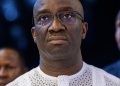
Former President Goodluck Jonathan has said he will consult widely before making a decision on calls urging him to contest the 2027 presidential election, stressing that the race for Nigeria’s highest office “is not a computer game.”
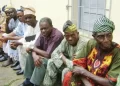
Jonathan spoke on Thursday while receiving youth groups who visited his office in Abuja to press him to join the race, saying he had taken note of their appeal but would not rush into a political decision without wide consultations.
His remarks come as the Federal High Court in Abuja is set to hear a suit today (Friday) seeking to bar him from contesting the 2027 presidential election on the grounds that he has allegedly exceeded the constitutional limit for holding the office of President.
The suit, filed by a lawyer, Johnmary Jideobi, is asking the court to declare Jonathan ineligible to run again and to restrain the Independent National Electoral Commission from accepting or publishing his name as a candidate in the forthcoming election.
Speaking on Thursday while receiving some youth groups who visited him at his office in Abuja to press him to return to the presidential race, the former President said he would consult widely before taking any decision, stressing that leadership required careful consideration.
“You are asking me to come and contest the next election. The presidential race is not a computer game. But I’ve heard you, and I’ll consult widely,” he said.
He commended the youth for showing interest in the country, describing patriotism as essential to nation-building.
“If you have no interest in the country, you will not bother to be here,” he added.
Jonathan also urged young Nigerians to promote peace and credible elections, warning that the absence of transparent electoral processes discouraged competent citizens from participating in politics.
“The key thing we need in this country is peace, so you continue to advocate for that. And you continue to advocate for peaceful and credible elections in the country.
“Because if we don’t have peaceful and credible elections, most good citizens will not want to bother to get involved in politics.”
The former President lamented Nigeria’s low voter turnout, saying the country recorded one of the poorest participation rates during elections despite having a large voting population.
“I’ve observed elections in about 14 or more African countries and even Southeast Asia. Nigeria has the lowest turnout in every election cycle.
“I think INEC needs to do something about it. They need to start getting consultants to look at it. And what is the cause? As young people, you must be involved in the electoral process,” he stated.
Jonathan challenged the youth to participate actively in the electoral process by obtaining voter cards and voting during elections.
“If I ask how many of you have your voter’s card now, probably 50 per cent of you don’t have your voter’s card. And you’re asking me to go and contest the election. So you must participate in the electoral process,” he said.
He also lamented the perception of Nigerians abroad, attributing it partly to leadership failures over the years.
Jonathan, however, reiterated that he had only listened to the appeal and would continue consultations before making any political decision ahead of 2027.
“I will consult. I cannot just wake up and say I want to be the president of Nigeria again. But I am telling you that I will consult. If there is a need to, I will wait,” Jonathan stated.
Meanwhile, the Federal High Court in Abuja will hear the suit, marked FHC/ABJ/CS/2102/2025, asking the court to declare Jonathan constitutionally ineligible to seek the presidency again.
Justice Peter Lifu, on April 28, ordered that hearing notices be issued and served on the defendants after they failed to file responses to the suit.
Jonathan is listed as the first defendant in the matter, while INEC and the Attorney-General of the Federation are joined as second and third defendants, respectively.
The plaintiff is seeking an order restraining Jonathan from presenting himself to any political party as a candidate for the 2027 presidential election.
He also prayed the court to stop INEC from accepting or publishing Jonathan’s name as a presidential candidate for the poll.
In the originating summons, the plaintiff asked the court to determine “whether in view of the combined provisions of sections 1(1), (2) and (3) and 137(3) of the 1999 Constitution, the 1st defendant is eligible, under any circumstances whatsoever, to contest for the office of the president of the Federal Republic of Nigeria.”
Jideobi argued that Jonathan had already exhausted the constitutional limit of two terms, having completed the tenure of late President Umaru Yar’Adua before serving another full term after winning the 2011 presidential election.
In an affidavit deposed to by Emmanuel Agida in support of the suit, the plaintiff stated that Jonathan was sworn in as president on May 6, 2010, following Yar’Adua’s death on May 5, 2010.
The affidavit added that reports suggesting Jonathan may contest the 2027 election informed the decision to approach the court.
“That the plaintiff believes that the 1st defendant, having completed the unexpired term of late President Yar’Adua and subsequently served a full term after the 2011 election, has exhausted the constitutional limit of two tenures as president,” the affidavit partly read.
The plaintiff further argued that if Jonathan contests and wins the 2027 election, he would be taking the presidential oath of office for the third time, contrary to the provisions of the Constitution.
Agida said the suit was filed “in the public interest, in the defence of the rule of law and accentuation of the supremacy of the Constitution, and to preserve the integrity of the Nigerian constitutional order.”