Seventy-eight-year-old Professor David Jowitt has lived in Nigeria for 45 years, teaching English at universities. Jowitt, who is currently at the University of Jos, Plateau State, tells about his experience in Nigeria, why he chose to stay and has remained unmarried, among other things.
Excerpts:
How long have you been in Nigeria?
I was born in the United Kingdom, in London to be more precise. I first came here in 1963 but I haven’t been here all the time since then. I have been here continuously since 1974, which is 45 years ago.
What brought you to Nigeria at the time?
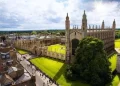
In 1963, l was a young graduate from the University of Cambridge in Britain and I wanted to do something adventurous for a while, at least. And somebody suggested to me: “Why don’t you go and teach in one of those developing countries that just gained independence because they need teachers?” When I asked the person which country he had in mind, he mentioned Nigeria. So Nigeria became my country of destination to teach, knowing that teaching was something I could do and enjoy doing.
Why did you not return to your country after a few years?
When I came here in 1963, I enjoyed my teaching experience and from that time onwards, I have always thought it is a very worthwhile thing for me to be a teacher here. But then, of course, there is another bigger dimension to the whole thing which is living in another country and experiencing another culture. And that personal contact with a different culture is what I found immensely rewarding. In other words, I have enjoyed the whole experience being in a place with a different culture and at the same time, when you leave your own culture to experience another culture, you become conscious of common humanity. There are ways by which the Nigerian culture is different from the British culture and at the same time, you will find some things which we human beings have in common. So, when you live in a different culture, there is this interesting blend of what is different and what is similar and that has built me for over 50 years
What are those things you like about Nigeria?
The warmth of Nigerians – the good humour and friendliness and the respect towards me that I sensed from my pupils in the school where I taught right from the beginning. Referring to the warmth and good humour of Nigerians, let me give you an example of that. In my department here at the University of Jos, we have more than 30 lecturers and we only have a few offices because we are expecting to have another building which may increase the number of offices available to us. So, there aren’t enough offices for people but there is one office where you find about six or seven persons at work. And we in the department call this office “IDPs’ office” and that is a bit of humour and you find this all the time about Nigerians. And I also like humour, laughing and meeting with people. Again, we laugh a lot as Nigerians. As you know, we have a lot of problems in the country. Yet, we have this ability to laugh about them and that is a great human quality.
What are those things you don’t like about Nigeria?
Perhaps, I shouldn’t say too much; after all, I am not yet a Nigerian. However, I have applied to be a Nigeria citizen. But one thing that frustrates me is timekeeping. We often have meetings and we don’t start on time. But in the modern world, it’s so important that we start on time because we don’t have all the time in the world to play with.
How would you rate the educational system in Nigeria?
The problem is complex. There are so many comments one could make and at the same time, there are salient features which must strike anybody that cry out for remedy. One of them is the huge number of students. When I first arrived in the country in 1963, we didn’t have more than 30 pupils in a class, until the 1970s when we began to see an enormous increase in the number of students in secondary schools and then later in the universities. As a teacher, there is a great difference in teaching a very large group from when you are teaching a small group.
How many wives do you have?
I don’t have any wife let alone have many wives. I am a Christian and only one wife is allowed.
Why do you choose to remain unmarried?
I have been asked this question several times and one answer I will give is that when I was younger, my great ambition in life was not to be a teacher but to write books. After I graduated, I found that I couldn’t just sit down to write books; you need to have an income. For me, teaching is a very demanding job if you want to do it well. So at that time, I was preoccupied with teaching to the extent that I didn’t get my first book published until I was 44 years old. What I am trying to say is that that was a time to get married and start a family. That may sound surprising because you would say there are many people in this world who have done just that but it is not easy to do that. One of my great friends in this country was the late Chinua Achebe. As we all know, he was a famous writer, a novelist and also a happy family man. I remember in 1971 when I was having breakfast with him and his wife at Nsukka; I also remember visiting him many years later in 1980 when he was the Head of the Department of English at the University of Nigeria, Nsukka. By this time, he had not brought out any new novel since 1966. The only fiction he had published was a collection of short stories which was published after the civil war. In my ingenuity when I saw him, I asked him if he had any other novel in the making or if we could expect any more novels from him very soon. He looked at me and pointed at a pile of files on his desk and said, “How do you expect me to write a novel when I have all these administrative works to do?” I felt for him and thought how sad it was that this great man would just be there and hindered when the world was crying for another novel from him.
How do you handle temptation from female students?
I resist the temptation as everybody ought to do. I know we are flesh and blood but that is no excuse. The temptation is there but one has to resist it.
What kind of Nigerian food do you like?
When I arrived in this country in 1963, I wanted to be part of the Nigerian culture. I wanted to start eating Nigerian food; to learn to speak a Nigerian language and dress the Nigerian way and so on. My answer will be everything and I’m happy to tell you that even recently, I ate a local food prepared by the Goemai people of Plateau State, which I had never tried before. I like Egusi soup which I sometimes prepare by myself.
At what point did you decide to settle in Nigeria?
Certainly, it was not my intention to still be here in my 70s. My idea was that after staying for a while, I would return to Britain and probably start teaching in a grammar school. So, after staying for the initial two years in Nigeria, I went back to my country for a postgraduate education course to become qualified as a teacher. This was at a time it was becoming more and more imperative for teachers not just to have the first degree but some kind of education qualification. When I was doing that course, I just knew that I wouldn’t be happy if I was not going to come back to Nigeria at the end of it. And that was what I did eventually. I came back to teach in a very good grammar school – Dennis Memorial Grammar School, Onitsha, Anambra State. Shortly afterwards, the Nigerian Civil War broke out and I had to return to Britain where I did a little bit of teaching. Thereafter, I went to teach in Libya for a while and again returned to Britain to get a master’s degree in Linguistics. But I always knew that before long, I would have to come back to Nigeria which I did in 1974 and since then, I have remained in Nigeria.
How would you describe your childhood period?
I can say I had a happy childhood even though my parents were poor by the British standard. I didn’t come from an educated family as my parents had only been to primary school in North London. But I often say nowadays that I was very lucky to have been born when I was and where I was because just after I was born, the Education Act of 1944 was passed which made secondary and university education free if you were able to get admission and I benefitted from that. Because of that, I went to secondary school and the university without my parents paying anything. And so, here in Nigeria, I’m very conscious of young people where in some cases, they are held back because there is no one to pay their school fees and because of that I have helped many Nigerians in this regard. I don’t mind advertising this aspect of my life. There was this young man from Benue State; I did not only pay for his first degree in Chemistry but also his master’s degree programme. And I would count this as one of my achievements in this country and I still play that kind of role.
How did you get your first job?
I graduated in June 1962 from the University of Cambridge. It was a year roughly before I came to Nigeria and during that one year, I wanted to study for admission into the British civil service but I had to keep myself alive and so, I had some clerical jobs I was doing in London offices because I had some typing skills. I learnt how to type when I was a boy. So, it was when I came to Nigeria in September 1963 that I was first given a teaching job in Delta State. I have lived in different parts of Nigeria since then, including Onitsha, Okene, Pankshin and Kano, where I got my first university appointment at Bayero University and finally the University of Jos where I have been since 2006.
How was your first salary and how did you feel when you received it?
I think my first salary was in 1962 and it was 10 pounds a week. I was doing a temporary job so I was paid weekly, typing in offices in London. About that time, a teacher in Britain would earn less than £1,000 a year. And then, I came to Nigeria and had my first permanent job on contract as a teacher in a missionary school in Ubulu-Ukwu in Delta State. I was not part of the civil service then but it was later when I started teaching in colleges of education that I became aware of the civil service hierarchy. So in 1974, I was appointed as Senior Education Officer and later promoted to Principal Education Officer and then later to Assistant Chief Education Officer. But way back in 1963, I wasn’t aware of the civil service hierarchy because I started in the mission schools. Coming back to your question on my first salary; it was at Ubulu-Ukwu in Delta State. The principal of my school handed me the wads of notes totalling £93. In those days, Nigeria still had pounds and shillings as its currencies. So, when I was given the £93, I was overwhelmed because I had never seen so much money in my life. It was more than enough for me.
Do you have any regrets in life?
Yes, one or two. When I was younger, I wanted to write a great novel. It was my ambition to write a great work of fiction. I haven’t yet done that; I have written many books, about 20 published books with my name on each of them. Many of them are English textbooks, which have gone through more than one edition. Undoubtedly, the one for which I am most known in Nigeria was published in 1991 – Nigerian English Usage. Even now, I am writing my autobiography. But I’m a very strong believer in divine providence because God has blessed me by enabling me to write many books. Though there are not the ones I had in mind when I was a boy, there is still time and one should be optimistic and not pessimistic.
What day would you describe as your happiest day in life ?
When I came to Nigeria, I wanted to learn the language of the people. Igbo was the language of the people of Ubulu -Ukwu where I settled. I can speak the language and also Hausa and Yoruba to some extent, as well as Igbira. I just love languages.
Are you still in touch with your family in London?
Yes. My elder sister is still alive although she is widowed and without any children. And I have a younger sister who died early last year and I went home for that. I have many friends and relatives who are doing well.
What do you consider as your greatest challenge in life?
My greatest challenge is overcoming despair and fear. Perhaps, I am somebody who is always tempted to be afraid. Just a few days ago, I was in an aeroplane flying from Ibadan to Abuja and soon after we left Ibadan, there was a bit of turbulence and I was very afraid. But the lady sitting next to me was not afraid. But when I think of these fears, my mind goes back to those early childhood experiences when our lives were threatened daily by bombings. So, learning to have complete trust in God and not to despair is quite a big challenge. – Culled from Punch.